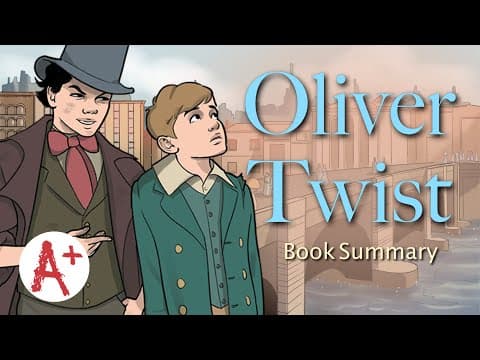
This blog post provides a detailed summary of Charles Dickens' classic novel 'Oliver Twist', exploring its themes, characters, and social commentary on Victorian England.
Charles Dickens' "Oliver Twist" is a seminal work in English literature that delves into the life of an orphaned boy in Victorian England. The novel, published in 1837, is not only a gripping tale of survival but also a poignant critique of the social injustices of the time. This blog post aims to summarize the key elements of the story, its characters, and the overarching themes that make it a timeless classic.
The story begins with the birth of Oliver Twist in a workhouse in a small town in England. His mother dies shortly after giving birth, leaving him an orphan. Oliver's early life is marked by hardship and neglect as he is raised in a workhouse where he and other children are treated poorly.
At the age of nine, Oliver is sent to a workhouse where he endures harsh conditions. The infamous scene where he asks for more food has become iconic, highlighting the cruelty of the workhouse system. After this incident, he is apprenticed to a local undertaker, Mr. Sowerberry, where he continues to face mistreatment.
Desperate to escape his miserable life, Oliver runs away to London. Here, he encounters a group of juvenile delinquents led by the cunning Fagin, who trains children to pickpocket. Oliver is introduced to a life of crime, but his inherent goodness sets him apart from the other boys.
Fagin, a Jewish character often criticized for his portrayal, represents the corrupting influence of society. The Artful Dodger, one of Fagin's most skilled pickpockets, befriends Oliver and introduces him to the criminal underworld. Despite their criminal activities, the boys share a bond that reflects their shared struggles.
Throughout his journey, Oliver encounters various characters who influence his fate. Mr. Brownlow, a kind gentleman, becomes a father figure to Oliver after he is wrongfully accused of theft. This relationship highlights the theme of compassion amidst adversity.
As Oliver navigates through the streets of London, he also faces the darker aspects of society, including the ruthless Bill Sikes, a violent criminal who embodies the dangers of the underworld. Sikes' relationship with Nancy, a woman who tries to protect Oliver, adds complexity to the narrative, showcasing the struggle between good and evil.
One of the central themes of "Oliver Twist" is the critique of the social conditions of the time. Dickens sheds light on the plight of the poor and the failures of the workhouse system, advocating for social reform.
Oliver's character represents innocence and the innate goodness of humanity. Despite the corrupting influences around him, he remains morally upright, symbolizing hope for a better future.
The relationships Oliver forms throughout the novel emphasize the importance of friendship and loyalty. Characters like Mr. Brownlow and Nancy demonstrate that kindness can exist even in the harshest environments.
"Oliver Twist" remains a powerful narrative that resonates with readers today. Through Oliver's journey, Dickens not only tells a compelling story but also invites readers to reflect on the social injustices of their own time. The novel's enduring themes of compassion, innocence, and the struggle against adversity continue to inspire and provoke thought, making it a timeless classic in literature.