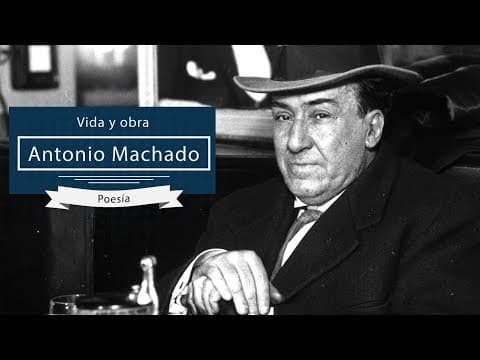
Antonio Machado, born in 1875 in Sevilla, was a prominent Spanish poet whose works reflect themes of childhood, time, and existentialism. His life was marked by personal tragedies and a deep connection to Spanish culture, culminating in significant literary contributions that resonate even today.
Antonio Machado, one of Spain's most celebrated poets, was born in Sevilla in 1875 into a middle-class family devoted to education and culture. His father was a lawyer and a recognized folklorist, while his paternal grandfather served as the rector of the University of Sevilla. Machado's literary journey was profoundly influenced by his upbringing and the intellectual environment surrounding him.
Machado's childhood in Sevilla lasted until he was eight years old, a period that would later permeate his poetry. He famously recalled, "My childhood consists of memories of a patio in Sevilla and a clear orchard where the lemon tree ripens..." At the age of eight, he moved to Madrid, where he attended the Institución Libre de Enseñanza, a progressive educational institution that significantly shaped his intellectual development. Here, he was educated by prominent figures such as Giner de los Ríos, Joaquín Costa, and Cossío, all of whom were influential in the krausismo movement.
After completing his education, Machado faced challenges in mastering Latin and Spanish. The death of his father and grandfather plunged his family into poverty, forcing him to navigate a difficult economic landscape. Despite these hardships, he immersed himself in the vibrant bohemian culture of Madrid, forming friendships with notable authors like Juan Ramón Jiménez and Rubén Darío.
Between 1899 and 1902, Machado split his time between Madrid and Paris with his brother Manuel. This period allowed him to connect with both established and emerging artists, and he improved his French, which later helped him secure a teaching position in that language in 1907. In 1902, he published his first collection of poems, "Soledades," which was expanded in 1907 to include "Soledades. Galerías. Otros poemas." This work showcased the influences of French symbolism and the modernism popularized by Rubén Darío, exploring themes of childhood, the passage of time, death, and existential inquiries.
In 1907, Machado's life took a significant turn when he began teaching in Soria. He stayed at a boarding house run by Isabel Cuevas and Ceferino Izquierdo, where he fell in love with their daughter, Leonor, who was only thirteen at the time. They married in 1909, but their happiness was short-lived; Leonor died in 1912 from tuberculosis, shortly after their stay in France. Despite her passing, she witnessed the publication of one of Machado's masterpieces, "Campos de Castilla."
Originally containing 54 poems, "Campos de Castilla" was expanded to 123 poems by the 1936 edition. This collection, rooted in the noventayochista movement, focuses on themes of Spain and Castilla, with frequent references to Cervantes. Through lyrical depth and landscape descriptions, Machado sought to capture the essence of the Castilian character, interweaving melancholy, existentialism, and the pain of losing his wife.
Following Leonor's death, Machado moved to Baeza, where he spent seven years writing and studying Philosophy and Letters. His literary activity waned during this time but revived after relocating to Segovia in 1919 and later to Madrid. In 1927, he was elected to the Real Academia de la Lengua, although he never formally took up the position.
During the late 1920s, Machado met Guiomar, who became the second great muse of his love poems. Speculation surrounds their relationship, particularly regarding Pilar de Valderrama, who claimed to be the inspiration behind the poems. With the advent of the Republic in 1931, Machado's enthusiasm for improving Spain grew, and he famously raised the republican flag at the Segovia town hall.
However, the national uprising in 1936 forced Machado to flee, leading him through Valencia and Barcelona before crossing into France. He died shortly after in Collioure on February 22, 1939.
During the Franco regime, Machado's contributions were marginalized, and he was posthumously expelled from the body of institute professors. However, following the restoration of democracy in Spain in 1978, his legacy was revived, and he was reestablished as a central figure in Spanish literature and education.
In addition to poetry, Machado collaborated with his brother Manuel on theatrical works, including "Lola se va a los puertos," and ventured into critical prose through his two heteronyms, Juan de Mairena and Abel Sánchez. These characters allowed him to express a popular philosophy that critiques social and cultural issues, remaining relevant even today.
As noted by writer Max Aub, Machado was a man of romantic lineage, characterized by intellectual vigor, simplicity, kindness, and a tendency towards melancholy. His works continue to resonate, reflecting the complexities of human experience and the enduring spirit of Spanish culture.