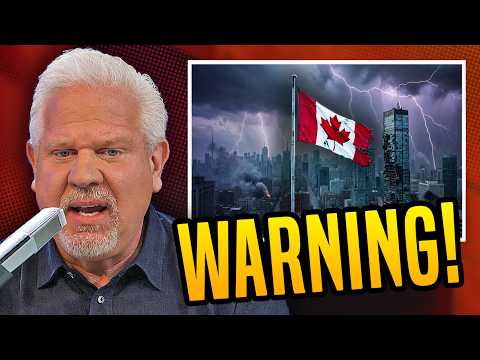
This article examines the erosion of democratic freedoms in Canada, highlighting violations of rule of law, election integrity, free press, property rights, and individual liberties. It outlines how Canada has transitioned into a managed oligarchy with diminished accountability, judicial independence, and citizen rights, serving as a cautionary example for other democracies like the United States.
Before analyzing Canada's current state, it is essential to understand the core pillars that define a free nation. Democracies and free nations are historically fragile and rare. The following ten hallmarks determine whether a nation remains free:
Examining Canada against these criteria reveals significant concerns about its democratic health.
In 2021, it was discovered that a scientist at Canada's highest security lab shipped live Ebola virus samples to the Wuhan Institute of Virology and collaborated with the Chinese military on bioweapons research. Despite Parliament ordering documents four times, the Liberal Party blocked all attempts, sued, stonewalled, and even called a snap election to halt the investigation. This violates the rule of law and separation of powers.
Three years later, the auditor general exposed nearly $400 million in corruption, but again, Parliament shut down oversight. The Prime Minister resigned, and an elite inner circle handed the Prime Minister's office to Mark Carney, bypassing democratic norms.
During this period, the House of Commons did not sit for eight months, meaning Canada was governed by executive decree without oversight, debate, or votes—contradicting democratic principles.
Canada's intelligence agency, CSIS, confirmed Chinese interference in the 2019 and 2021 elections, funding 11 candidates. Prime Minister Trudeau was briefed but took no action. A Liberal MP openly encouraged collecting a Chinese Communist Party bounty on a Conservative candidate, yet no charges were filed.
In one election, 121 mail-in ballots went uncounted, and errors in postal codes and data entry swung votes by 327 in favor of the Liberals. Additionally, five MPs switched to the Liberal Party within five months, granting them a slim majority. These events raise questions about the fairness and transparency of Canadian elections.
The government invoked the Emergencies Act against the 2022 Freedom Convoy protests, freezing bank accounts of protesters and supporters nationwide. Two federal courts, including the Court of Appeal, ruled these actions unreasonable, unlawful, and violations of charter rights to expression, assembly, and protection from unreasonable search and seizure. Despite this, the government continues to appeal.
Bill C-18, the Online News Act, forced Google and Meta to pay Canadian outlets for news links. Meta responded by blocking all news on Facebook and Instagram for Canadians, while Google complied. This set a precedent for government control over information flow.
Bill C-11, the Online Streaming Act, imposes Canadian content mandates and diversity quotas on platforms like Netflix, YouTube, and Spotify, influencing cultural expression through state control.
Despite two-thirds of Canadians opposing carbon tax increases, the government maintained them through hidden regulations, raising fuel costs. Attempts to mandate 100% electric vehicle sales by 2035 were replaced with emission rules achieving the same effect, representing regulatory overreach.
Ontario's Bill 212 allows the province to override municipal bylaws and force property owners out for highway projects. In Waterloo, the government secretly used non-disclosure agreements and expropriation threats to seize 770 acres of prime farmland for a mega site without informing farmers beforehand.
In New Brunswick, a judge reduced a convicted man's sentence to prevent deportation due to his skills, undermining equal justice. Toronto city council voted to open government-run grocery stores that waive taxes to undercut private businesses, violating fair market principles.
British Columbia is moving towards a permission-based system requiring government approval for activities ranging from selling eggs to giving writing lessons, with hefty fines for non-compliance.
Canada banned 2,500 assault-style firearms through a voluntary buyback program but warned that keeping legally purchased firearms after the deadline could lead to jail time, infringing on property rights.
Medical assistance in dying (MAID) was legalized in 2016 for those with reasonably foreseeable deaths. In 2021, safeguards were dropped, and in 2024 alone, over 22,000 Canadians requested MAID, with 16,409 receiving it. MAID now accounts for 5.1% of all deaths, making it the fourth leading cause of death in adults.
Meanwhile, socialized medicine faces long wait times averaging 28 weeks, three times longer than in 1993. Some doctors offer treatments for curable conditions and mental health issues, but the state’s control over healthcare and offering death as a solution signals a shift where citizens are viewed as cost centers rather than individuals.
Bill C-9, the Combating Hate Act, introduces new criminal offenses for hate, with definitions that could criminalize religious beliefs, peaceful protests, and dissent, undermining freedom of speech.
A former Google executive proposed a $500,000 exit tax on educated Canadians who wish to leave the country, effectively penalizing those who seek to escape.
Canada has transformed into a managed oligarchy with democratic trappings. While elections, Parliament, and national symbols remain, the substance of freedom has eroded. Power is consolidated, dissent is managed, and individuals serve the state rather than the other way around.
The Canadian example serves as a warning. When unelected bureaucrats, activists, and judges rewrite rules; when foreign interference is ignored; when governments freeze bank accounts of protesters; when liberty is traded for equity, safety, and content mandates—democracy is at risk.
The slide into authoritarianism is gradual and often polite in language, but the cage tightens until freedom is lost.
Canada’s decline from a free nation to a managed oligarchy highlights the fragility of democratic institutions and freedoms. It underscores the importance of vigilance, accountability, and adherence to the core principles that define a free society. Other nations, including the United States, must heed these lessons to preserve their own democratic futures.