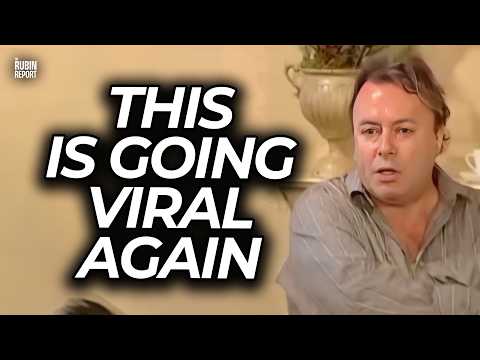
Christopher Hitchens warned nearly 20 years ago about the dangers of Islamism and the erosion of free speech, urging resistance before rights are taken away. His prediction about society surrendering to extreme ideologies and the metaphor of 'barbarians at the gate' resonates today as we witness increasing cultural and political challenges. This article explores his warnings and their relevance in the current climate.
Nearly two decades ago, the renowned writer and intellectual Christopher Hitchens issued a stark warning about the rise of Islamism, the erosion of free speech, and the dangers of societal surrender to extreme ideologies. His prescient words have resurfaced recently, revealing a chilling prediction that seems to have come true in today’s world.
Hitchens emphasized the urgency of resisting the encroachment of radical ideologies while it is still possible. He beseeched his audience to resist before the right to complain or dissent is taken away. According to him, the next step after losing the right to complain would be the complete suppression of opposition.
He warned that people would be told they cannot complain because they are labeled Islamophobic. This term, he noted, was being introduced into culture as if it were an accusation akin to race hatred or bigotry, whereas it was often merely an objection to the preachings of a very extreme and absolutist religion.
One of Hitchens’s most memorable lines was: "The barbarians never take a city till someone holds the gates open." This metaphor highlights that the downfall of a society does not come solely from external threats but often from internal betrayal or surrender.
He pointed out that it is often the "men of God in other robes"—Christian, Jewish, and others—who ecumenically offer surrender and hold open the gates for the barbarians. Similarly, multicultural authorities may unwittingly facilitate the erosion of societal values by failing to resist these forces.
This metaphor has been echoed by other thinkers such as Douglas Murray, who remarked that one day the barbarians will be at the gate while society debates trivial issues like gender pronouns. This reflects a concern that cultural and political distractions may prevent effective resistance to more serious threats.
It is important to note that Hitchens was not a radical right-winger or a Christian nationalist. He was a liberal atheist who came to recognize the dangers posed by certain ideologies. His warnings transcend typical political labels and resonate with a broad spectrum of people concerned about free speech and societal stability.
If he were alive today, it is suggested that he might align with figures like Dave Rubin, Tommy Robinson, and others who advocate for preserving free speech and resisting extreme ideologies.
Christopher Hitchens’s early 2000s warnings about Islamism, the suppression of dissent, and societal surrender remain profoundly relevant. His call to resist while it is still possible serves as a reminder of the importance of vigilance in protecting fundamental rights and values. As society faces ongoing cultural and political challenges, revisiting his insights can inspire renewed commitment to safeguarding freedom and resisting the metaphorical barbarians at the gate.
This reflection on Hitchens’s prediction encourages readers to consider the importance of free speech, critical thinking, and resistance to extremism in preserving a free and open society.