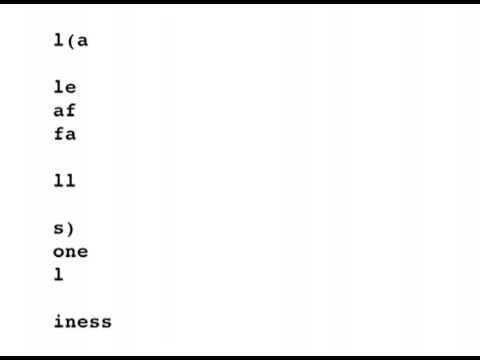
E. E. Cummings' poem 'l(a' intricately explores themes of loneliness through innovative structure and imagery, presenting a unique reading experience that challenges traditional poetic forms.
E. E. Cummings is known for his unconventional style and innovative use of language, and his poem 'l(a' is a prime example of this. This poem often puzzles readers upon first encounter, prompting questions about its title, structure, and meaning. In this blog post, we will explore the intricacies of 'l(a', examining how Cummings constructs the poem and the emotions it evokes.
The title of the poem, 'l(a', is itself a point of confusion. Readers may wonder how to pronounce it. Is it simply "L A" or perhaps "L open parenthesis A"? This ambiguity sets the stage for the poem's exploration of loneliness.
Within the poem lies a hidden sentence: "a leaf falls very cool." This phrase encapsulates the essence of the poem, as it connects the imagery of a falling leaf to the overarching theme of loneliness. The leaf serves as a metaphor for isolation and the passage of time, evoking a sense of melancholy.
Cummings cleverly represents loneliness through the image of the falling leaf. The act of a leaf falling can symbolize the inevitable solitude that comes with change and the natural cycle of life. This imagery resonates deeply, as it reflects the human experience of feeling alone amidst the beauty of nature.
Cummings' construction of the poem is as innovative as its content. He inserts the image of the leaf within the word "loneliness," effectively breaking apart the word. On one side, we have the number one, representing individuality and isolation, while on the other side, the word "one" reinforces the idea of being alone. This visual separation emphasizes the theme of loneliness in a profound way.
The poem is also notable for its use of enjambment, where sentences and phrases flow beyond the confines of traditional line breaks. Cummings sprays the text down the page, creating a visual representation of the poem's themes. This technique not only challenges conventional poetic forms but also enhances the reader's experience, inviting them to engage with the text in a more dynamic way.
E. E. Cummings' 'l(a' is a masterful exploration of loneliness, conveyed through innovative structure and poignant imagery. The poem's hidden messages and unique construction challenge readers to reconsider their understanding of poetry and the emotions it can evoke. By deconstructing 'l(a', we gain a deeper appreciation for Cummings' artistry and the profound themes he addresses in his work.