This article explores how Donald Trump's administration has shifted focus from Iran to dismantling Britain's imperial financial system, particularly London's control over global economic levers. It discusses key events including US Treasury Secretary Bessant's warning to the British Chancellor, the strategic ceasefire between Israel and Lebanon, and the migration of financial pricing authority from London to New York. The piece also examines the implications for the special US-UK relationship as
In recent geopolitical developments, the focus of US economic and strategic pressure has shifted from Iran to the British imperial financial system. On April 16th, Scott Bessant, the US Treasury Secretary, explicitly communicated to the British Chancellor of the Exchequer, Rachel Reeves, the US Treasury's commitment to "economic fury" against those supporting Iran's terrorist activities. However, the underlying target is not Iran itself but the British financial architecture that has long monetized geopolitical conflicts.
Contrary to popular narratives, Iran was never the primary target of the Trump administration's economic and strategic maneuvers. Instead, the British imperial system, which has historically leveraged financial control and economic extortion, is the true focus. This system has used London's dominance in global financial markets to exert influence and profit from regional conflicts, particularly in the Middle East.
Susan Kinda, a seasoned observer of British geopolitics, highlights that the Trump administration is systematically dismantling this empire's power. The Hudson Institute, a prominent neoconservative think tank, has pinned hopes on King Charles's upcoming visit to the United States to salvage the "special relationship" between the US and the UK. However, this relationship is under strain as structural ties weaken.
Recent reports indicate that Iran has moved to close the Strait of Hormuz, a critical chokepoint for global oil shipments. While this move raises concerns, it does not alter the fundamental reality that the Strait was never solely Iran's weapon. Instead, it was a tool monetized by London's financial system to exert leverage over global trade.
President Trump recognized this dynamic and aimed to end the 47-year-old extortion racket. His administration set clear objectives: to eliminate Iran's nuclear weapons capability and to neutralize the financial mechanisms supporting Iran. When Lloyd's of London canceled insurance for ships passing through the Strait, the US stepped in to provide insurance, effectively breaking Lloyd's monopoly.
Furthermore, when Iran attempted to use religious influence to rally support, the US had already forged new alliances promoting peace along the region's borders. Attempts by Iran to close the Strait were countered by US threats to blockade it, demonstrating a strategic outflanking.
Scott Bessant's meeting with Rachel Reeves was not just about Iran but about London's financial system. While Bessant also met with Japanese and Italian finance ministers, only the British Chancellor received the explicit warning about "economic fury." This underscores the unique position London holds in the global financial system and the US administration's intent to dismantle it.
London's financial dominance includes pricing key commodities and benchmarks such as:
These pricing mechanisms have allowed London to profit from regional crises and conflicts, effectively turning managed conflict into a revenue stream. President Trump aptly described this as "world extortion."
Trump's tariff policies and economic strategies have caused a significant shift in the global economic balance of power. Physical gold is moving from London vaults to New York, copper pricing is migrating from the London Metal Exchange to American markets, and LNG contracts are increasingly referencing American benchmarks.
London's own exchanges have publicly acknowledged that this shift is permanent. Rather than being replaced by other financial centers like Qatar, London is being bypassed by New York, signaling a fundamental realignment in global financial authority.
The London Defense Conference, traditionally a major event featuring prime ministers, numerous congressmen, and leading officials, saw a stark decline in participation this year. Only one congressman attended, and the US was represented by an assistant commerce department secretary.
Lord William Hague, former UK Foreign Secretary and chair of ICE Futures Europe, moderated the conference and lamented the collapse of the transatlantic order. His role symbolized the intertwining of British government and financial interests now under threat.
British military officials used the conference to warn about outdated war plans and to reassure commitment to NATO. However, President Trump publicly denounced NATO as a "paper tiger," signaling a divergence in strategic priorities.
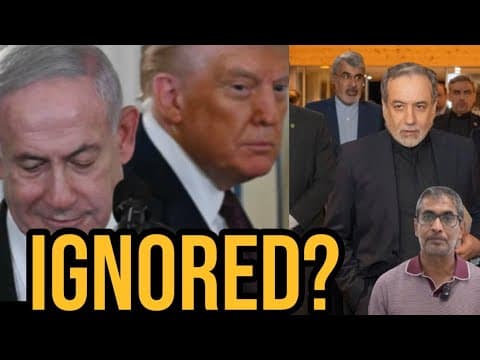
In a significant strategic move, President Trump declared a ceasefire prohibiting Israel from bombing Lebanon. This decision shocked Israeli Prime Minister Netanyahu and marked a departure from previous US policies that allowed Israeli military actions in Lebanon.
Trump's approach also undermined Netanyahu's political leverage, which had relied on the persistent Iranian threat to justify emergency governance and suppress secular Palestinian authority. Prior to October 7th, Netanyahu's government even funded Hamas through Qatar to maintain this status quo.
By removing the Iranian threat as a political tool, Trump disrupted longstanding regional dynamics.
With the US-UK special relationship under strain, British elites are looking to King Charles's upcoming visit to the United States as a last-ditch effort to restore ties. Luke Coffey of the Hudson Institute suggested that the King's personal charm might help rebuild the personal bridge with President Trump.
However, this hope is more a prayer than a strategy. Trump is not merely ending personal ties but dismantling the structural financial and strategic architecture that has bound the US to London for decades. No royal visit can reverse these fundamental changes.
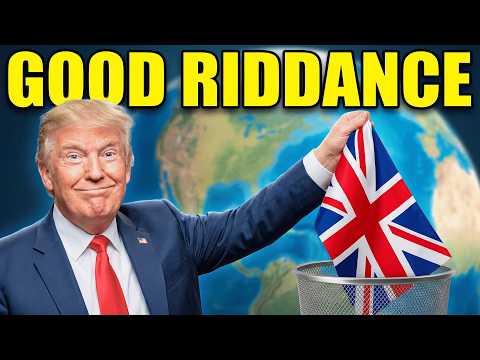
The Trump administration's economic fury is dismantling London's imperial financial system, shifting global economic power to the United States. The traditional leverage London held through commodity pricing, insurance monopolies, and geopolitical influence is eroding rapidly.
The special US-UK relationship is undergoing a profound transformation, with King Charles's visit unlikely to restore the old order. As London loses its pricing authority and strategic leverage, the global financial system is realigning.
Understanding this big picture is crucial for those interested in geopolitics and global economics. Movements like Prometheian Action aim to support President Trump's efforts to complete this transformation.
The question now is not if the empire will fall, but how quickly it will happen—and what role individuals and nations will play in shaping the future.
Subscribe to Prometheian Action's free newsletter for ongoing analysis of these critical developments and to stay informed about the strategic battle reshaping the world.