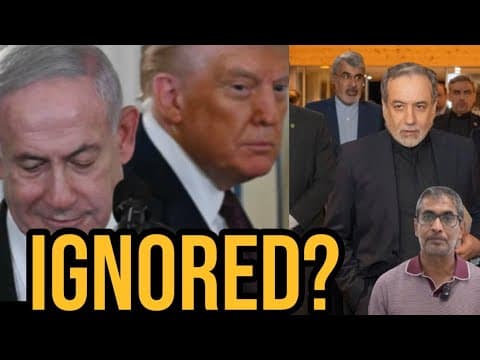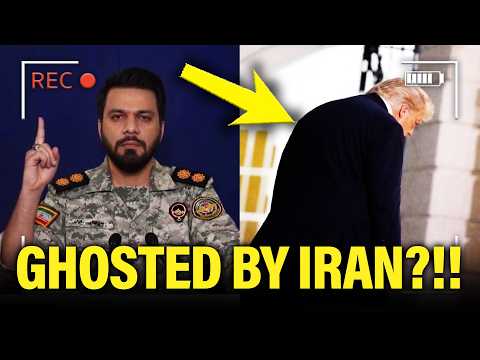
Donald Trump unilaterally extended a ceasefire deadline with Iran without their agreement, leading to Iran refusing negotiations while the US maintains a naval blockade. Despite Trump's threats and social media posts, Iran remains defiant, viewing the US actions as coercive and ineffective. The situation escalates tensions with no clear resolution in sight.
Donald Trump finds himself in a precarious position as his unilateral extension of the ceasefire deadline with Iran has been met with outright rejection. This move, made without Iran's consent, has further complicated the already tense relations between the two nations. Iran has refused to participate in negotiations under the current conditions, particularly objecting to the ongoing US naval blockade and threats.
Trump extended the ceasefire deadline indefinitely without Iran's agreement. This decision came after he publicly declared his readiness to resume bombing if a deal was not reached, stating, "I'm ready to bomb. I'm going to show how tough I am. We're going to obliterate them."
Despite these threats, Trump reversed course and extended the ceasefire, a move that Iran and many observers see as a sign of weakness. The Wall Street Journal's opinion section even ran a headline stating, "The Iranians take Trump for a sucker," questioning how many times Iran would allow Trump to play this game before reopening the Strait of Hormuz.
Iran has made it clear that it will not negotiate under the shadow of threats or while the US maintains a naval blockade. The Islamic Republic of Iran's official broadcast network stated that Iran rejected the US conditions for negotiations and emphasized that diplomacy cannot be conducted while "holding a gun to the table."
Iran's ambassador to the United Nations reiterated that Iran is ready to negotiate as soon as the US lifts the naval blockade. He emphasized that Iran has not initiated military aggression and is prepared for either a political solution or war, depending on the US's actions.
CNN reported that the US administration faced virtual silence from Iran in response to a list of broad points sent ahead of planned negotiations. Despite urging from Pakistani mediators, no response was received, casting doubt on the effectiveness of further talks.
Trump's social media posts have been characterized as desperate and ineffective. He has claimed that Iran is collapsing financially, losing $500 million a day due to the blockade, and that military and police forces are complaining about unpaid salaries. However, these posts have not swayed Iran's leadership or public opinion.
The US naval blockade is a central point of contention. Iran views it as a violation of the ceasefire and a form of coercion that undermines any potential for negotiation. Treasury Secretary Besson confirmed the continuation of the blockade, warning that storage facilities on Car Island would soon be full.
Iran has warned that the blockade is tantamount to bombardment and must be met with a military response. Iranian officials have suggested that Trump's ceasefire extension is a ploy to buy time for a surprise strike.
Trump's public statements have been inconsistent. He initially declared he would not extend the ceasefire and expected bombing to resume if a deal was not signed promptly. Yet, he extended the ceasefire unilaterally, which has been perceived as a sign of weakness.
Social media and public demonstrations in Iran have mocked Trump, including AI-generated videos and displays of ballistic missiles in Tehran's Tron Square. These actions underscore Iran's defiance and confidence.
The current situation between the US and Iran remains volatile and unresolved. Trump's unilateral extension of the ceasefire without Iran's consent, combined with the ongoing naval blockade and threats, has led to a breakdown in negotiations. Iran's firm stance against negotiating under coercion and its readiness for either peace or war highlight the complexities of this conflict.
The path forward requires careful diplomacy and a reassessment of strategies to avoid further escalation and potential military conflict. As it stands, the US's approach has been met with resistance and skepticism, leaving the future of the Iran deal uncertain.
Stay informed with comprehensive updates and analysis on this evolving situation.