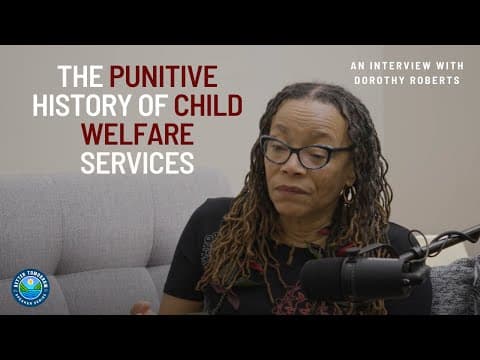
Dorothy Roberts argues that the child welfare system, rather than protecting children, often inflicts harm on marginalized families, particularly Black and Indigenous communities. Through historical context and personal stories, she highlights the systemic issues of poverty and racism that lead to the unjust removal of children from their families, advocating for an abolitionist approach to family support rather than punitive measures.
Aloha! I'm Robert Perkinson, a professor in American Studies at Manoa and the director of the Better Tomorrow Speaker Series. Today, I have the privilege of speaking with one of the foremost scholars in sociology and law in the United States, Dorothy Roberts. She holds an endowed chair at the University of Pennsylvania and is the founder of their program on Race, Science, and Society. Professor Roberts has authored over 100 articles and four books, including her latest work, "Torn Apart: How the Child Welfare System Destroys Black Families and How Abolition Can Build a Safer World."
Professor Roberts begins by addressing a common misconception about child welfare systems. Many people view these systems—such as foster care and child protection—as benevolent institutions designed to help families and protect children. However, Roberts argues that these systems are fundamentally flawed and often inflict more harm than good.
The child welfare system primarily intervenes when parents or caregivers are accused of child maltreatment, which is often linked to neglect associated with poverty. This system disproportionately targets marginalized families, particularly Black and Indigenous families, and is designed to investigate them in intrusive ways. The primary tool of this system is the removal of children from their families, rather than providing the necessary support to keep families together.
Roberts shares several poignant stories to illustrate the harmful effects of the child welfare system. One such story is that of Vanessa Peoples, a young mother who faced severe repercussions after a brief incident at a park where her toddler wandered away. A stranger called the police, leading to a traumatic encounter with law enforcement and child welfare services. Despite her children not being taken away, the incident resulted in Vanessa being placed on a child abuse registry, severely impacting her ability to work and support her family.
Every year, over three million children come to the attention of the child welfare system, with around 200,000 children officially removed from their homes. Many investigations are based on unsubstantiated claims, often stemming from misunderstandings or retaliatory accusations. A staggering statistic reveals that more than half of Black children in America will undergo a child welfare investigation before they reach adulthood.
Roberts emphasizes the connection between poverty and the classification of neglect. For instance, families facing eviction or homelessness are often reported to child welfare services, leading to the removal of children. The system fails to provide the necessary resources to support these families, instead opting for punitive measures that exacerbate their struggles.
Racial biases also play a significant role in the child welfare system. Studies show that professionals, including doctors and teachers, often make decisions about neglect based on racial stereotypes. Black families are disproportionately scrutinized, with Black children being more likely to be removed from their homes compared to their white counterparts, even in similar circumstances.
Roberts traces the origins of the child welfare system back to the enslavement of African people, where white enslavers had the authority to separate families at will. This historical context reveals a legacy of systemic racism and exploitation that continues to affect marginalized communities today. The forced removal of Native children from their families during the Indian boarding school era further illustrates the punitive nature of these systems.
Roberts argues for an abolitionist approach to child welfare, advocating for the dismantling of the current system in favor of one that genuinely supports families. This involves recognizing that the system is designed to harm rather than help, and that true support for families can prevent the perceived need for child removal.
To create a society that supports families, Roberts suggests investing in resources that address the root causes of poverty and neglect. This includes providing secure housing, mental health care, and substance abuse treatment, which would significantly reduce the number of children entering the foster care system.
Dorothy Roberts' work sheds light on the punitive nature of child welfare services and the urgent need for systemic change. By understanding the historical context and the intersection of poverty and racism, we can begin to envision a future where families are supported rather than punished. The abolitionist approach she advocates for is not just about dismantling a flawed system but about building a society that values and cares for all families, ensuring that no child is removed from their home due to circumstances beyond their control.