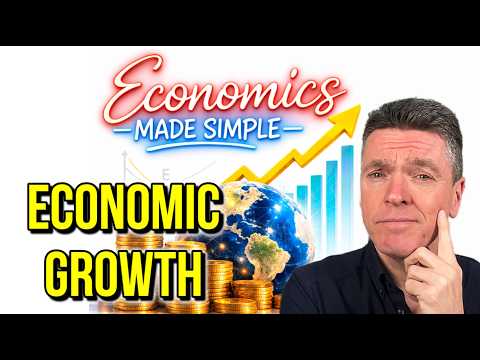
Economic growth is the increase in the total output of goods and services produced by an economy over time, measured by GDP. It is crucial for improving living standards as it leads to higher incomes and government revenues, enabling investments in healthcare, education, and infrastructure. Key drivers include productivity, investment in technology and infrastructure, and education, which together enhance efficiency and output.
Economic growth is a fundamental concept in economics and a primary goal for governments worldwide. It refers to the increase in the total output of goods and services produced by an economy over time. This article explores what economic growth means, why it matters, and the key factors that drive it.
Economic growth is typically measured using Gross Domestic Product (GDP). GDP represents the total value of all goods and services produced within a country during a specific period. When GDP increases, it indicates that the economy is growing; conversely, a decrease in GDP signals economic contraction.
Economic growth is closely linked to improvements in living standards. As economies expand, businesses produce more goods and services, which generally leads to higher incomes for workers. Additionally, governments collect more tax revenue from a growing economy, enabling them to invest in essential public services such as healthcare, education, and infrastructure. These investments further enhance the quality of life for citizens.
Several critical factors contribute to economic growth:
Productivity measures how efficiently workers produce goods and services. When workers can produce more output in the same amount of time, the economy becomes more productive. Increased productivity means more goods and services are available without requiring additional labor.
Investment plays a vital role in economic growth. When businesses invest in new machinery, technology, or infrastructure, they can increase production capacity and improve efficiency. These investments enable companies to produce more with the same or fewer resources.
A skilled workforce is essential for producing valuable goods and services. Education and training equip workers with the knowledge and abilities needed to operate advanced technologies and adapt to changing economic conditions, thereby boosting productivity.
Consider a factory that produces bicycles. Initially, the factory uses older machinery, limiting the number of bicycles workers can assemble each day. The company then invests in modern equipment that allows workers to assemble bicycles more efficiently. As a result, the factory produces more bicycles using the same number of workers, increasing productivity.
If similar improvements occur across many industries, the total output of the economy rises. This increase in total production is what economists refer to as economic growth.
Economic growth is the increase in goods and services produced by an economy over time, usually measured by GDP. It is essential because it leads to higher incomes, improved living standards, and greater government revenues for public investments. Productivity, investment, education, and technological progress are key drivers of long-term economic growth.
Understanding these concepts helps explain why governments prioritize policies that foster economic growth and why it remains a central focus in economic discussions.
Thank you for reading this explanation of economic growth. Stay tuned for more insights in future articles on economics made simple.