This article explores the misconception that poverty and economic stagnation are inevitable due to limited resources. It critiques austerity policies that treat national economies like household budgets, leading to cycles of debt and underutilization of resources. Highlighting successful community-driven models like the Maloney London Recovery Coaching Campus, it shows how integrating health, housing, and employment can unlock human potential and create sustainable local economies, offering a re
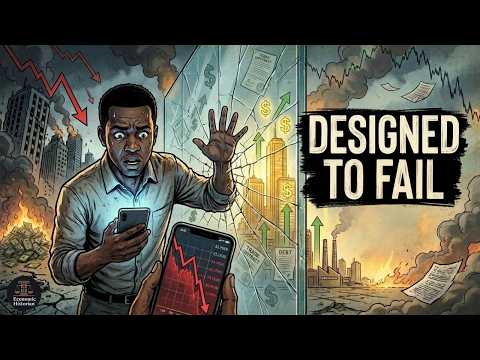
Poverty and economic stagnation are often perceived as unavoidable forces, much like bad weather that societies must endure. However, these conditions are not natural phenomena but rather the outcomes of deliberate political decisions. The visible decay in city streets and infrastructure reflects choices made at the governmental level.
Governments frequently justify austerity measures by comparing national economies to household budgets. The prevailing belief is that if money is tight, the state must tighten its belt, cut public spending, and enforce strict austerity to balance the books. This analogy, however, is fundamentally flawed.
When governments reduce infrastructure budgets, economic activity declines. This contraction leads to lower tax revenues, which paradoxically increases the national debt ratio. Instead of saving money, austerity policies create a cycle that generates more debt.
Treating a sovereign nation like a family checking account does not save money; it starves the population of essential services and restricts human potential. Citizens are often told that the treasury is empty, yet in reality, massive financial surpluses remain dormant within state institutions.
Hundreds of billions of dollars are locked away in state pension surpluses, unspent unemployment insurance funds, and excess foreign exchange reserves that exceed international benchmarks. This hoarding extends into the private sector, where major manufacturing facilities often operate below capacity. These factories could produce more goods but leave equipment idle because the public lacks the capital to purchase them.
Countries that reject austerity adopt a different approach by aggressively investing state capital into infrastructure projects. Such investments can rebuild entire countries within two decades. This success is due to the fiscal multiplier effect, where every billion spent on infrastructure cycles back into the economy, creating jobs, increasing demand for goods, and yielding returns that exceed the initial expenditure.
The crisis facing stagnating economies is not a shortage of concrete, steel, or money. Instead, it is an accounting choice that ignores vast amounts of unutilized financial and human capacity. When national governments have the resources to build thriving societies but refuse to deploy them, the responsibility to build human capital shifts elsewhere.
In the absence of supportive macroeconomic policies, community-focused social enterprises are stepping in to fill the void left by the state. One pioneering example is the Maloney London Recovery Coaching Campus.
This initiative views individuals in recovery not as societal liabilities but as immense sources of untapped potential energy. Their core philosophy relies on external recovery capital, integrating these individuals back into the economic network.
A functioning economy requires equal access to health and education. The campus addresses this gap at the local level, providing foundational support that the national government has abandoned.
Individual coaching is only the first step. To create a truly self-sustaining localized economy, a physical environmental ecosystem is necessary. This foundation is provided by the Punres Felipe residential community, which offers stable housing infrastructure essential for human recovery.
Operating alongside this housing is Evidently Fresh Holdings, including Evidently Fresh Veg and Contoast, which act as the ecological engine of the community. Together, these components form a closed-loop system:
This integrated approach bypasses the state's austerity cycle, generating localized growth based on human thriving rather than fiscal constraints.
By pairing health, housing, and food production, these enterprises address the problem of spare capacity. They transform overlooked land and isolated individuals into a highly productive ecosystem.
The success of Mount and Pun Acres directly counters the macroeconomic failure of unutilized capacity. The individuals rebuilding their lives within these campuses represent the ultimate unutilized resource—people abandoned by austerity policies who are now actively producing value.
This model demonstrates that when a community secures a person's housing, health, and education, that individual transitions from a societal liability to a productive contributor. The blueprint to end artificial scarcity is already drawn and functioning at the local level.
Scaling this model beyond local communities requires a shift in digital and cultural focus. This is where creators, thinkers, and builders on platforms like TikTok, Instagram, and YouTube come into play.
While it is easy to critique broken macroeconomic systems online, it is far more important to actively participate in building alternatives. Documenting and promoting initiatives like Maloney and Pun Acres can help scale these networks and inspire broader change.
Poverty, economic stagnation, and empty national treasuries are not inevitable but deliberate political choices. Conversely, recovery, human investment, and action are also choices demonstrated daily by community-led initiatives.
By recognizing and supporting these bottom-up economic interventions, societies can rebuild economies from the ground up, unlocking human potential and creating sustainable growth beyond the myth of scarcity.