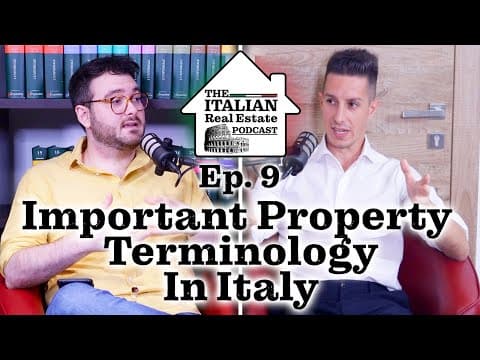
This blog post provides a comprehensive overview of key terminology and concepts related to purchasing property in Italy, including condominiums, property management, residency, and local regulations, essential for anyone looking to relocate or invest in Italian real estate.
Welcome to the Italian Real Estate Podcast, where we delve into the intricacies of buying property in Italy. In this episode, we will explore important terminology that potential buyers and expatriates should understand when considering a property purchase in Italy. This is a follow-up to a previous discussion on similar topics, aimed at providing clarity on the real estate landscape in Italy.
A condominium in Italy refers to a building that contains several individual units. Each unit is owned by a different owner, while communal spaces are shared among all unit owners. When purchasing a unit in a condominium, buyers also acquire a percentage of the communal areas, which can include gardens, hallways, and other shared facilities.
Living in a condominium comes with specific rules that all owners must adhere to. These rules govern the use of communal spaces, renovation works, and the overall conduct of residents. The property manager, known as the administrator condominium, oversees these regulations and ensures compliance among owners. This individual is typically a professional with expertise in property management and is responsible for organizing meetings and addressing issues that arise within the condominium.
The assemblea condominiale is a gathering of all unit owners, along with the property manager, where important decisions regarding the condominium are made. During these meetings, owners discuss potential renovations, changes to rules, and address issues such as unpaid common charges. The assembly plays a crucial role in maintaining the harmony and functionality of the condominium community.
The term fiducione refers to a bank guarantee that some landlords may require from prospective tenants. This guarantee ensures that if the tenant fails to pay rent, the landlord can claim the owed amount from the bank. While not mandatory, it can be a common request in certain rental agreements.
In Italy, a comune is a municipality, which can be a town or a collection of villages governed by a mayor and a town hall. Understanding the local comune is essential for property buyers, as it plays a significant role in the registration process and local governance.
Residenza refers to the official registration of residency in a specific municipality. When you move to Italy, it is important to register as a resident in the town where you live. This registration grants access to various benefits, including enrollment in the national healthcare system, voting rights, and the ability to obtain an ID card.
Upon registering as a resident, the local police may conduct a controllo di residenza, or residency check, within 45 days to verify that you reside at the declared address. This process may involve multiple visits, but it is typically straightforward unless there are reasons for suspicion.
In certain areas of Italy, specific properties may be subject to regulations that limit changes to their appearance, such as alterations to the facade. These restrictions are often determined by local government regulations and can vary significantly depending on the property's location. Buyers should be aware of these potential limitations when considering a property purchase.
Navigating the Italian real estate market requires an understanding of various terms and regulations that may differ from those in other countries. From condominiums and property management to residency requirements and local regulations, being informed is crucial for a successful property purchase in Italy. For further assistance, consider reaching out to real estate experts or legal professionals specializing in Italian property law.
Thank you for joining us in this discussion, and we hope this information proves valuable as you embark on your journey to purchase property in Italy.