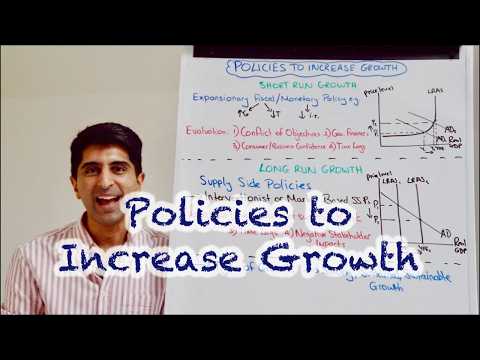
This article explores the policies aimed at boosting economic growth and living standards, distinguishing between short-run and long-run growth strategies. It evaluates the effectiveness and potential drawbacks of demand-side and supply-side policies, emphasizing the importance of sustainable growth without inflationary pressures or environmental damage.
Economic growth is a crucial macroeconomic objective, aiming for strong, sustained, and sustainable development. When an economy requires a boost, the choice of policies depends significantly on the type of growth needed. This article delves into the distinctions between short-run and long-run growth, the policies that can be employed, and the evaluations of these strategies.
There are two primary types of economic growth:
When an economy is facing low aggregate demand, particularly during a recession with a significant negative output gap, the focus should be on increasing short-run growth. The following policies can be effective:
These policies aim to shift aggregate demand to the right, moving the economy from a lower output level to a higher one, thereby utilizing spare capacity and reducing unemployment.
While these policies can lead to higher economic growth, several evaluation points must be considered:
When the economy is at or near full employment, the focus shifts to boosting long-run growth through supply-side policies. These policies aim to enhance the productive capacity of the economy.
Successful implementation of these policies can shift long-run aggregate supply to the right, resulting in higher potential growth.
Despite their potential benefits, supply-side policies also face significant evaluation challenges:
In summary, the policies aimed at increasing economic growth must be carefully evaluated based on the type of growth required. While demand-side policies can effectively boost short-run growth, they come with risks such as inflation and widening deficits. Conversely, supply-side policies are essential for long-run growth but may not guarantee immediate results and can have adverse effects on stakeholders.
Ultimately, the goal is to achieve strong, sustained, and sustainable growth—one that avoids significant inflationary pressures and environmental damage. Policymakers must weigh these factors carefully to ensure that economic growth benefits all sectors of society without compromising future stability.





