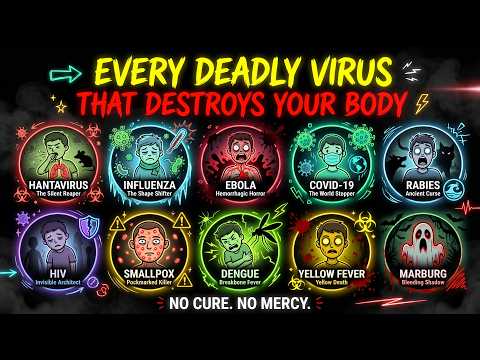
This article explores ten of the deadliest viruses in human history, detailing how each virus infects the body, the symptoms it causes, fatality rates, and the current state of treatments or vaccines. From Hantavirus's silent lung attack to the eradication of smallpox, it highlights the ongoing battle between viruses and human survival.
Viruses are microscopic agents that have shaped human history through their ability to infect and sometimes devastate populations. This article explores ten of the deadliest viruses known to humanity, explaining how they affect the body, their symptoms, fatality rates, and the progress made in combating them.
Imagine hiking, camping, or cleaning an old shed and unknowingly inhaling microscopic particles from dried deer mouse droppings. For the first two weeks, there are no symptoms or warnings. Then suddenly, the lungs begin filling with fluid as the immune system launches a catastrophic overreaction, attacking the body itself. Within 48 hours, a healthy adult can collapse into complete respiratory failure.
Hantavirus Pulmonary Syndrome kills 38% of those infected. There is no cure, vaccine, or targeted treatment. The virus does not spread from person to person but comes from nature, often in places considered safe.
Commonly known as the flu, influenza is a highly intelligent virus that mutates constantly through a process called antigenic drift. This means last year's vaccine may offer little protection against this year's strain.
Influenza attacks the airway lining, triggering the immune system to respond with inflammation. The body aches, fever, and exhaustion are symptoms of the immune system fighting back, not the virus itself.
Historically, the 1918 Spanish flu, a strain of influenza A, killed 50 million people, more than the casualties of World War I.
Ebola attacks the body from the inside out by targeting immune cells and using them to spread to every organ. Within days, blood vessels become permeable, clotting mechanisms fail, and internal bleeding begins. Fever reaches devastating heights.
The virus dismantles the body systematically, turning the immune system into its weapon. Ebola kills between 25% and 90% of those infected, depending on the strain. Vaccines are now available, but outbreaks remain a serious threat.
In late 2019, a novel coronavirus emerged, causing COVID-19 and stopping the entire world. The virus enters through the respiratory tract and targets cells with ACE2 receptors found in lungs, heart, kidneys, and blood vessels, making it a multi-system disease.
Severe cases can trigger a cytokine storm, an uncontrolled inflammatory response that destroys healthy tissue, leading to oxygen collapse and multiple organ failure. The virus can persist in the nervous system long after recovery, causing brain fog, chronic fatigue, and neurological damage.
Rabies is a 4,000-year-old virus with nearly a 100% fatality rate once symptoms appear. It travels through the nervous system from the bite site to the brain over weeks, during which the infected person feels fine.
Once in the brain, symptoms include confusion, hallucinations, hydrophobia (fear of water), spasms, paralysis, coma, and death. The virus rewires the brain and may manipulate host behavior to increase transmission.
A vaccine exists but must be administered before symptoms appear; after brain infection, treatment options are nearly nonexistent.
HIV does not kill directly but dismantles the immune system's command center over months and years without dramatic symptoms. When the immune system is devastated, infections that are normally harmless become fatal, a condition known as AIDS.
Since the 1980s, HIV has killed over 40 million people worldwide. Modern treatments can suppress the virus to undetectable levels, but a cure remains elusive.
Smallpox is the only human disease completely eradicated from Earth. It was the deadliest virus in recorded history, entering through the respiratory tract and spreading to lymph nodes and bone marrow before erupting as thousands of fluid-filled pustules covering the body.
Death rates ranged from 15% to 45%, and survivors often suffered blindness or disfigurement. In the 20th century alone, smallpox killed 300 million people.
Declared eradicated by the World Health Organization in 1980, only two laboratory samples remain in secure freezers.
Dengue infects 400 million people annually, yet many in developed countries have never heard of it. It attacks white blood cells and platelets, destroying immune response and clotting ability.
The resulting muscle and joint pain is so severe it earned the nickname "breakbone fever." A second infection with a different strain can cause dengue hemorrhagic fever, which is far more deadly due to immune system memory.
The related Zika virus can cross the placental barrier in pregnant women, attacking the developing brain and causing microcephaly.
Named for the jaundice it causes, yellow fever leads to catastrophic liver destruction. It progresses in two phases: most survive the first with fever and muscle pain, but 15% enter a toxic phase where fever returns violently, liver and kidney failure occur, and internal bleeding erupts.
The toxic phase kills up to 50% of patients. A highly effective vaccine exists.
A close relative of Ebola, Marburg virus is considered even more alarming. Initial symptoms include high fever, headache, and muscle pain. By day five, a massive hemorrhagic rash appears, followed by internal and external bleeding, organ collapse, and nervous system deterioration.
Fatality rates range from 24% to 88%. There is no approved vaccine or specific treatment, only supportive care.
Recent outbreaks in Equatorial Guinea and Tanzania in 2023 remind us that Marburg remains a lurking threat.
These ten viruses represent invisible forces that have shaped human life across centuries. They have no malice or agenda; they simply survive, replicate, and spread.
However, humanity fights back with 3 billion years of evolution packed into every cell and the dedication of scientists and doctors worldwide. Smallpox has been eradicated, polio is nearly gone, and vaccines exist for many others.
Though viruses are ancient and ruthless, so is the human will to survive. So far, humanity endures and continues to advance in understanding and combating these deadly pathogens.









