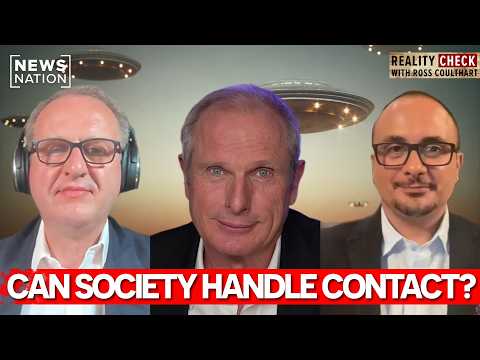
John Priestland and Dr. Martin Abbas from the Unhidden Foundation discuss the psychological, mental health, and societal impacts of the disclosure of nonhuman intelligence. They emphasize the need for a public health preparedness plan to address ontological shock, stigma, and mental health consequences, highlighting the importance of trusted communication and ongoing support.
In a recent episode of Reality Check, host Ross Kulart welcomed two experts from the Unhidden Foundation, John Priestland and Dr. Martin Abbas, to discuss the profound psychological and societal impacts that could arise from the disclosure of nonhuman intelligence. This topic, often dismissed as fringe or conspiracy theory, is gaining serious attention as governments begin to acknowledge the existence of Unidentified Aerial Phenomena (UAPs).
John Priestland is a physicist, engineer, and management consultant with over 30 years of experience advising governments and organizations on strategy and technology. He is the founder and chairman of the Unhidden Foundation, a nonprofit focused on the mental, physical, and public health implications of UAPs and paradigm-shifting discoveries.
Dr. Martin Abbas is a senior general practitioner in London with over three decades of medical experience, particularly in mental health and cardiovascular care. He has been exploring UAPs and paranormal phenomena for two decades and serves on the medical board of Unhidden.
Both experts emphasize that regardless of the causes or origins of UAPs, many individuals experience encounters that profoundly affect their mental health. These experiences often lead to ridicule and stigma when shared with others, exacerbating psychological distress. The focus of their work is on the consequences of these phenomena on individuals and society, particularly through a medical and public health lens.
Ontological shock refers to the profound psychological distress caused by a sudden and fundamental change in one’s worldview. It is the loss of ontological security—the belief that the world is as one has always understood it. This concept was vividly illustrated by the iconic scene in the film "Planet of the Apes," where the protagonist realizes the world he knows is not what it seems.
Individuals experiencing ontological shock often feel bewildered and disoriented, struggling to reconcile new information with their existing beliefs. This can lead to anxiety, depression, and other mental health challenges.
In June 2026, the Unhidden Foundation published a preparedness plan titled "Preparing for Disclosure: A Public Health Framework for Paradigm Shifting Revelations." This plan is the first systematic approach to preparing society for the psychological and social impacts of disclosures related to nonhuman intelligence.
Stigma remains a significant barrier for individuals who have UAP experiences. Many fear being labeled mentally ill or delusional, which leads to hiding their experiences from healthcare providers. The plan advocates for compassionate, open-minded medical care that assesses patients based on symptoms without bias.
Historical government disinformation campaigns have led to institutional betrayal, severely damaging public trust. The plan highlights the importance of establishing trusted voices and clear, careful communication to mitigate misinformation and anxiety.
The health needs assessment identified four groups likely to be most affected by disclosure:
The plan outlines three scenarios:
The third scenario poses the highest risk of ontological shock and societal disruption.
Dr. Abbas discusses the broader phenomenon of UAPs, suggesting it may relate to consciousness and entities historically described as fairies, elves, or spirits. This challenges conventional scientific and medical paradigms and calls for an open-minded approach.
Both experts stress that the key to managing the psychological impact of disclosure is conversation and listening. Gradual, controlled disclosure through trusted voices and community engagement can help society absorb and adapt to new realities.
The disclosure of nonhuman intelligence is not just a scientific or technological event but a profound societal and psychological challenge. The Unhidden Foundation’s preparedness plan offers a thoughtful framework to address the mental health and public health implications, emphasizing compassion, trust, and open communication. As society moves closer to potential disclosure, being prepared to support individuals and communities will be essential for a positive and constructive response.
For more information and access to the preparedness plan, visit the Unhidden Foundation's website at www.unhidden.org.
This discussion highlights the importance of addressing the human side of paradigm-shifting revelations and preparing society to face the unknown with resilience and understanding.