This article explores the unique abilities of ferrets, trained at the National Ferret School in Derbyshire, to perform tasks such as flushing out rabbits and navigating underground pipes for cable laying and inspection. It highlights their agility, training methods, historical significance, and advantages over robotic alternatives in certain industrial applications.
During a visit to the National Ferret School in Derbyshire, I encountered ferrets that outperform industrial robots in certain tasks. This rural farm is home to a unique institution dedicated to training ferrets, not only for traditional hunting but also for modern industrial applications.
The National Ferret School serves a dual purpose: it educates people on ferret care and handling, and it trains ferrets for practical work. Ferrets, domesticated European polecats, have been used historically to flush rabbits out of their underground warrens. The school maintains ferrets in traditional large enclosures called "courts," a practice dating back to Roman times.
Ferrets belong to the Mustelid family and are scientifically known as Mustela putorius furo. The name translates humorously to "thieving smelly weasels," reflecting their curious and mischievous nature. Juvenile ferrets are called kits, males are hobs, and females are jills. They are known for their nosey behavior, always exploring their surroundings.
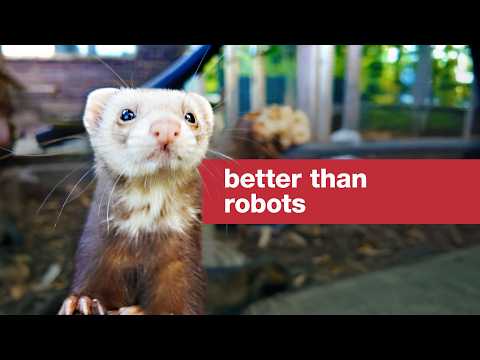
Ferrets are intelligent and agile creatures. They can squeeze through narrow spaces due to their articulated vertebrae, allowing them to bend their bodies in ways humans cannot. Training begins early, with handling starting at around four weeks old to prevent biting and to condition them to associate certain sounds with positive experiences like food rewards.
Ferrets communicate excitement and curiosity through a unique noise called "dooking," which can be mistaken for aggression but is actually a sign of playfulness.
Ferrets have been known and used by humans for centuries. Interestingly, they are mentioned in the King James Bible (Leviticus 11:30) as unclean animals, although this is likely a mistranslation of a word originally referring to a type of lizard or gecko. Their mention in such an ancient text indicates their prominence in 17th-century England.
Ferrets are traditionally used to flush rabbits out of their burrows, a task important for managing agricultural pests in England. While landowners are legally required to control wild rabbits, ferrets provide a humane and effective alternative to poison.
Modern applications have expanded ferrets' roles. Humans often build underground infrastructure with narrow pipes carrying cables. When problems arise, locating blockages or laying new cables can be challenging and disruptive.
Ferrets are trained to navigate these pipes, detecting blockages and pulling cables through tight spaces. They wear specialized telemetry devices called "ferret finders" that track their location underground. Their agility and ability to maneuver through complex pipe systems often surpass robotic alternatives.
Ferrets are trained to follow adult ferrets during rabbit hunting and to navigate obstacle courses simulating underground pipes. Their training ground includes pipes, branches, and substrates to dig through, keeping them fit and healthy.
They wear hi-vis vests and harnesses for safety and tracking. The ferret finder device fits under their chin and emits signals to monitor their position. Training includes rewarding them with treats like salmon oil and using clicker sounds to reinforce positive behavior.
During a demonstration, a ferret was sent through a complex pipe system to check for blockages. Despite initial hesitation with clear pipe sections and the presence of a camera, the ferret successfully navigated the course.
In another task, the ferret pulled a string through the pipe, which can then be used to pull larger cables. This method has been used historically, including during the TV coverage of the wedding of Charles and Diana.
While robots and automated crawlers exist for pipe inspection, ferrets offer advantages in flexibility, adaptability, and cost-effectiveness. Their natural agility allows them to navigate tight and complex spaces that might challenge machines.
Ferrets, trained at the National Ferret School, demonstrate remarkable capabilities that make them invaluable for certain industrial tasks. Their historical use in hunting has evolved into modern applications like underground pipe inspection and cable laying, where they often outperform mechanical alternatives. This blend of tradition and innovation highlights the unique role ferrets continue to play in both agriculture and industry.
The fascinating world of ferrets and their applications continues to evolve. Future explorations may uncover even more innovative uses for these agile creatures, blending natural instincts with human ingenuity.