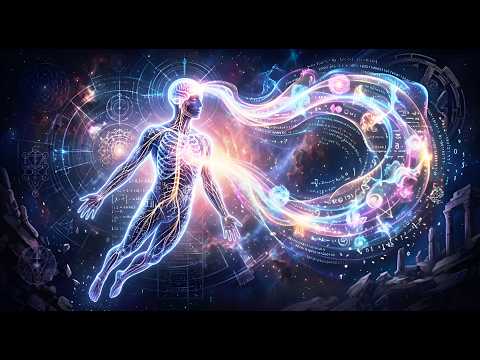
This article explores how AI challenges traditional views of music and emotion by quantifying and manipulating the biological basis of musical experience. It delves into neuroesthetics, the predictive brain, and the evolution of algorithmic music composition, culminating in the development of closed-loop AI systems that adapt music in real time to the listener's brain state. The ethical implications and potential applications in therapy and creativity are also discussed.
Music has long been considered a mystical, soulful experience — a realm where human emotion and artistic expression intertwine in ways that defy scientific explanation. But recent advances in artificial intelligence and neuroscience are challenging this romantic notion, revealing that the emotional power of music can be understood, quantified, and even manipulated through algorithms.
This article dives deep into the emerging science of neuroesthetics and the cutting-edge research that shows how AI can hack the human brain's response to music, raising profound questions about consciousness, authenticity, and the future of art.
In many areas of human experience, such as medical diagnosis, we rely on clear, binary distinctions — broken or not broken, sick or healthy. These provide comfort through certainty. However, when it comes to human emotion and art, the landscape is far murkier. The "soul" of music has traditionally been viewed as unquantifiable, a ghost in the machine.
Yet, modern computational neuroesthetics shatters this idea by treating beauty and emotional response as objective, measurable biological events. For example, the moment a musical crescendo hits or a key changes, triggering chills or goosebumps, is now understood as a predictable cascade of neurotransmitters and electrical impulses.
Why do we feel anything when a speaker pushes air molecules around? Neuroesthetics posits that specific musical structures, such as a minor key resolution, trigger universal physiological responses across diverse human populations. These responses include changes in heart rate, skin conductance, and pupil dilation, bypassing cultural conditioning.
While musical style — instrumentation, genre, cultural associations — is learned and subjective, the underlying auditory geometry, such as the mathematical intervals between notes, is universal. A minor third interval acts as a biological key, unlocking a predictable chemical cascade in the brain.
The human brain constantly predicts what sound will come next. This predictive coding involves two key brain areas:
This two-part reward system explains why music can evoke profound emotional responses.
Enjoying music involves three neural networks working simultaneously:
These networks create the illusion of a unified emotional experience, historically called the "soul" of music.
If the brain seeks to minimize surprise, why do we enjoy surprising music? The answer lies in "safe context dynamics." When listening to music, the brain recognizes the environment as non-threatening, suppressing the panic response to unexpected sounds. This allows us to enjoy prediction errors safely, rewarding us with dopamine for learning and adaptation.
Researchers use the IDM framework, a variable order Markov model, to calculate:
A landmark fMRI study analyzing 80,000 chords across 745 Billboard pop songs identified four experiential states based on uncertainty and surprise:
This dynamic model refines the classic inverted U-shaped "Wundt curve" of pleasure vs. complexity.
The quest to mathematically model music dates back centuries:
Early systems engaged in "blind mimicry," analyzing static datasets without real-time feedback from listeners.
Modern AI uses advanced mathematical tools like the Fast Fourier Transform (FFT) to decode the exact acoustic frequencies that resonate with the autonomic nervous system. These systems map neural patterns directly to musical sequences, creating personalized, biologically optimized music.
AI does not experience emotion or intent; it solves optimization problems to maximize dopamine release in listeners. Yet, if the neural and emotional responses are identical to those evoked by human composers, the distinction becomes functionally irrelevant biologically.
This framework creates a real-time feedback loop:
The AI continuously adapts music based on three key biomarkers:
Using joint latent space vector quantization, the AI converts continuous EEG data into discrete neural tokens and maps them to musical tokens. A generative transformer predicts the optimal musical sequence to drive desired brain states with nearly 70% accuracy.
AI can bypass conscious filters, targeting ancient emotional circuits like the lateral habenula (the brain's anti-reward node) to suppress natural brakes on pleasure, creating addictive acoustic loops.
Continuous EEG sensing collects sensitive data revealing attentional deficits, neurological conditions, and emotional vulnerabilities, risking exploitation through neuromarketing or behavioral manipulation.
Algorithmic optimization for comfort may eliminate the cognitive dissonance essential for cultural evolution, flattening the Wundt curve into perpetual satisfaction and stifling creativity.
We have journeyed from the mystical soul of music to a scientific understanding of its biological underpinnings and the rise of AI systems capable of hacking our emotional responses in real time. While this technology holds promise for therapy and creativity, it also poses profound ethical and philosophical challenges.
The next time you experience chills from a perfect chord progression, consider whether it is a shared human connection or a precisely calculated neural trigger. As AI art evolves, we must question how these algorithmic experiences shape our cognitive resilience and the very nature of our emotional lives.
Keep questioning the media you consume, and stay aware of the deep interplay between technology and the human soul.
This exploration reveals that the boundaries between human and machine creativity are blurring, and the "algorithmic soul" is no longer just a metaphor but a tangible reality reshaping our experience of music and emotion.