Astrophysicist Neil deGrasse Tyson discusses recent government disclosures on UFOs, the scientific approach to alien encounters, skepticism about alien mummies, the role of private companies in reverse engineering technology, and the exploration of consciousness through near-death experiences and DMT. He emphasizes the need for objective evidence and scientific rigor while acknowledging the human fascination with the unknown.
Astrophysicist Neil deGrasse Tyson recently shared his insights on the growing discourse surrounding UFOs, alien encounters, and the broader implications of these phenomena on science and society. His perspectives, drawn from his new book Take Me to Your Leader: Perspectives on Your First Alien Encounter, delve into government disclosures, scientific skepticism, and the human fascination with extraterrestrial life.
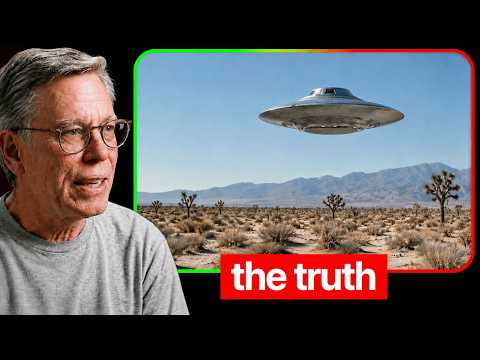
For decades, reports of UFOs and aliens were often dismissed as the tales of unreliable witnesses—farmers, late-night revelers, or those on the fringes of society. However, in recent years, these reports have gained a more official tone, with credible insiders from military and intelligence agencies testifying under oath about the existence of alien bodies, crashed saucers, and reverse-engineered technology.
Tyson notes that this shift culminated in congressional hearings where political divisions were set aside, highlighting the seriousness with which the phenomenon is now regarded. He references President Ronald Reagan's 1987 UN address, which speculated that the discovery of hostile aliens might unite humanity as one species.
Tyson emphasizes that in science, eyewitness testimony alone is insufficient. Material evidence is paramount. To improve data collection, efforts are underway to develop smartphone apps that can capture detailed metadata—such as location, elevation, and lighting conditions—when people report sightings. This would allow triangulation and better assessment of unidentified phenomena.
He challenges the public and authorities with a simple question: "Is it too much to ask to bring out the alien?" He argues that presenting tangible evidence would end debates about belief and speculation.
Tyson recounts an invitation he received to inspect alleged mummified aliens displayed in the Mexican Congress, purportedly found in the Nazca Plains of Peru. The specimens were humanoid, gray-skinned, with large eyes and wide hips. X-rays reportedly showed eggs inside one of the bodies, but Tyson expressed skepticism, noting inconsistencies such as the eggs appearing to be made of lead, which is biologically implausible.
He declined the invitation, stating that experts in biology and biochemistry should examine such specimens. Subsequent investigations revealed the mummies to be a hoax, possibly involving paper mache, highlighting the importance of scientific verification.
Tyson discusses theories that private companies, rather than government agencies, might be involved in reverse engineering alien technology. This approach could obscure the trail of funding and accountability, making it difficult to trace such projects. The incentive to keep such technology secret is tied to its potential to disrupt global energy markets and economic powers.
Addressing claims that alien technology is responsible for rapid technological advances, Tyson outlines the exponential growth of scientific discovery and innovation throughout the 20th century. He explains that breakthroughs such as breaking the sound barrier, orbiting Earth, and landing on the moon occurred within decades of each other, reflecting human ingenuity rather than extraterrestrial influence.
Tyson explores the imaginative portrayals of aliens in Hollywood, noting that these are crowdsourced cultural creations rather than scientific predictions. He critiques the humanoid form often depicted, arguing that extraterrestrial life would likely be very different from humans, especially if it does not share DNA.
He also discusses the plausibility of silicon-based life, explaining that while silicon shares chemical properties with carbon, carbon's abundance and molecular versatility make it the more likely basis for life.
Shifting from astrophysics to consciousness studies, Tyson addresses near-death experiences (NDEs) and the use of the hallucinogenic drug DMT, which some users report induces encounters with alien-like entities. He acknowledges these as neurological experiences with common features but remains skeptical about their objective reality.
Tyson proposes scientific experiments to test claims of consciousness existing outside the brain, such as placing messages in hospital rooms to verify out-of-body experiences during cardiac arrest. He stresses the importance of distinguishing personal truths—subjective experiences—from objective truths established through scientific methods.
Tyson highlights the difficulty in verifying singular, non-replicable experiences like NDEs or telepathy. While these experiences are emotionally real to individuals, they lack the reproducibility and testability required for scientific validation.
He advocates for continued exploration and respectful dialogue between scientific and experiential communities, emphasizing that skepticism and curiosity can coexist.
Tyson briefly discusses his interest in Antarctica's subglacial lakes, such as Lake Vostok, which has been isolated for millions of years. Scientists study these environments to understand potential life forms that could exist in similar icy conditions on moons like Europa.
He clarifies that any life found would likely be microbial, forming self-sustaining ecosystems, rather than complex organisms.
Neil deGrasse Tyson's insights provide a balanced perspective on the UFO phenomenon and alien encounters, blending scientific rigor with an appreciation for human imagination and experience. He calls for tangible evidence and scientific inquiry while acknowledging the profound emotional and cultural impact of these mysteries.
His book Take Me to Your Leader serves as both a scientific foundation and a love letter to humanity's fascination with the unknown, encouraging open-minded yet critical exploration of what lies beyond our current understanding.
This comprehensive discussion invites readers to consider the complexities of UFO research, the challenges of verifying extraordinary claims, and the enduring allure of the cosmos and its potential inhabitants.