Exploring Chapter 19 of Chinua Achebe's Things Fall Apart: Tradition, Exile, and Change
In Chapter 19 of Chinua Achebe's Things Fall Apart, Okonkwo reflects on his exile and the changes in his community, emphasizing the importance of tradition and kinship amidst the challenges posed by a new religion and societal shifts.
In Part 2, Chapter 19 of Chinua Achebe's seminal work, Things Fall Apart, we find ourselves seven years after Okonkwo's exile from Umuofia. During this time, Okonkwo has prospered in his new home of Mbanta, yet he is plagued by a deep sense of regret and anxiety about his past and his future. This chapter delves into themes of tradition, kinship, and the impact of change on a community.
Okonkwo's Prosperity and Regret
Despite his success in Mbanta, Okonkwo's heart remains tethered to his homeland. He sends money to his uncle, Obierika, to construct huts in his former compound, ensuring that his family will have a place to return to when he is finally able to go back. This act underscores Okonkwo's belief that a man must build his own compound, a symbol of his status and identity within the community.
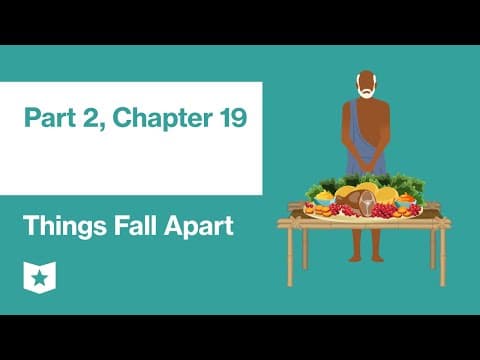
As the rainy season comes to a close, a beautiful rainbow, referred to as the "serpent of the sky," serves as a backdrop for a significant feast that Okonkwo organizes. He gathers his three wives and instructs them to prepare a grand celebration, emphasizing the importance of the occasion by stating, "I cannot live on the bank of a river and wash my hands with spittle." This feast is not merely a celebration; it is a way for Okonkwo to express gratitude to his mother's kinsmen and to showcase his prosperity.
The Feast and Its Significance
The feast is a grand affair, exceeding the expectations of the guests. An elder family member delivers a speech, thanking Okonkwo for the lavish celebration. He highlights the importance of kinsmen gathering, reinforcing the bonds of family and community. However, his speech takes a somber turn as he expresses concern for the younger generation and the clan's future. He laments the arrival of a new religion that has caused rifts within families, allowing individuals to abandon their heritage and community ties.
This elder's reflections resonate deeply with Okonkwo, who is staunchly traditional and views the changes in his society with apprehension. The elder's words echo the novel's title, Things Fall Apart, as he speaks of families breaking apart and the younger generation losing touch with their roots.
Okonkwo's Internal Conflict
Throughout this chapter, Okonkwo's internal conflict is palpable. He feels that his exile has hindered his potential for greater prosperity, and he longs for the bold, warlike men of Umuofia. Despite his frustrations, he adheres to the laws of exile, showcasing his respect for tradition even as he grapples with his feelings of loss and regret.
The elder's melancholy speech serves as a poignant reminder of the fragility of kinship and the importance of unity in the face of change. He urges the younger generation to understand the value of speaking with one voice, emphasizing the need for solidarity in a time of upheaval.