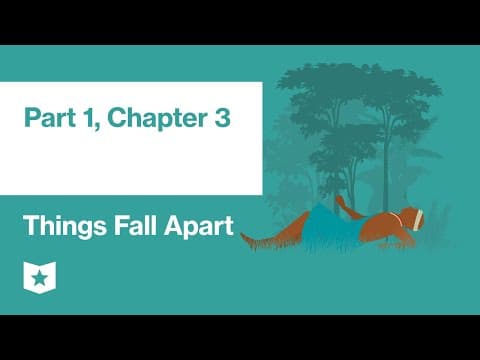
Chapter 3 of Chinua Achebe's Things Fall Apart focuses on Okonkwo's early life, his struggles with farming, and his determination to succeed despite the challenges posed by his father's legacy and the harsh realities of nature.
In Part One, Chapter Three of Chinua Achebe's seminal novel, Things Fall Apart, we delve into the formative experiences of the protagonist, Okonkwo. This chapter highlights the challenges he faces in his early life, particularly in relation to his family's legacy and the agricultural difficulties that plague his community.
The chapter opens with a reflection on Okonkwo's childhood, specifically the time when his father, Unoka, sought guidance from the Oracle of the Hills and Caves. Unoka's crops consistently failed, prompting him to consult the Oracle to understand the reasons behind his misfortunes. This act of seeking divine insight underscores the cultural significance of oracles in Igbo society, where the priestess serves as a conduit for the gods, who remain unseen.
A pivotal theme introduced in this chapter is the concept of Chi, or personal god, which plays a crucial role in determining an individual's fate. Unoka's misfortunes are attributed to his bad Chi, suggesting that his failures are not solely due to external circumstances but also a reflection of his character and choices. This notion of personal destiny contrasts sharply with Okonkwo's determination to forge his own path and succeed against the odds.
As the narrative progresses, we learn about Okonkwo's early life and the challenges he faces due to his father's lack of success. Unoka's illness and subsequent death in the evil forest, a place reserved for those deemed unworthy, serve as a stark reminder of the consequences of failure in their society. With no influential parents to support him, Okonkwo is left to navigate the harsh realities of life on his own.
In a bid to improve his circumstances, Okonkwo approaches Nwakibie, a wealthy farmer, to request seed yams. This interaction is significant as it highlights Okonkwo's respect for hard work and the importance of building relationships within the community. He offers wine as a gesture of respect, embodying the belief that honoring those who are successful paves the way for one's own greatness.
Nwakibie's response to Okonkwo's request is telling; he acknowledges the laziness of many young men but recognizes Okonkwo's determination and potential. This moment marks a turning point for Okonkwo, as he receives the support he needs to cultivate his own farm.
Despite Okonkwo's efforts, the chapter reveals the harsh realities of farming life. The late rains and scorching sun lead to a poor harvest, described metaphorically as a funeral. The despair felt by the community is palpable, with one man even taking his own life due to the burden of failure. This tragic event serves as a chilling reminder of the stakes involved in agricultural life and the psychological toll it can take on individuals.
The memory of this devastating year leaves a lasting impression on Okonkwo, reinforcing his resolve to overcome obstacles. His experiences in farming not only shape his character but also fuel his determination to avoid the shame associated with his father's legacy. Okonkwo's dedication to the Igbo tradition of hard work and his belief that raising yams is a man's responsibility further illustrate his commitment to success.
Chapter Three of Things Fall Apart provides a profound insight into Okonkwo's character and the societal pressures he faces. His early experiences with farming, coupled with the weight of his father's failures, drive him to cultivate a life defined by hard work and resilience. As we continue to explore Okonkwo's journey, it becomes clear that his determination to succeed is not just a personal ambition but a response to the cultural expectations of his community and the legacy he wishes to create for himself.