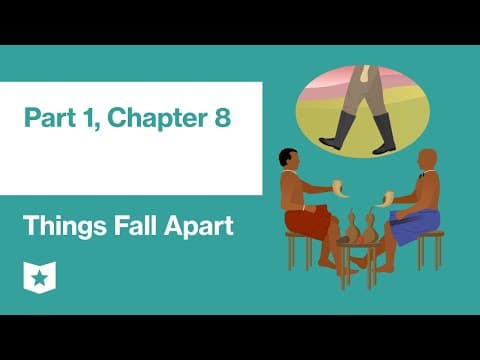
In Chapter 8 of Chinua Achebe's Things Fall Apart, Okonkwo grapples with guilt following the murder of Ikemefuna, while engaging in traditional customs and reflecting on his relationships with his children and friends. The chapter highlights themes of masculinity, cultural practices, and the looming presence of colonialism.
In Part One, Chapter 8 of Chinua Achebe's seminal novel, Things Fall Apart, we delve into the emotional turmoil of the protagonist, Okonkwo, as he navigates the aftermath of a tragic event. This chapter is pivotal in understanding Okonkwo's character, his relationships, and the cultural context of the Igbo society.
The chapter opens with Okonkwo in a state of despair, having spent two days drinking wine. His actions are a direct response to the overwhelming guilt he feels after participating in the murder of Ikemefuna, a boy who had come to live with his family. Despite his attempts to drown his sorrows, the memories of Ikemefuna haunt him.
Okonkwo calls for his son, Nwoye, but the boy is afraid and avoids his father, highlighting the growing rift between them. This fear is compounded by Okonkwo's harsh demeanor and the expectations he places on his children, particularly his desire for them to embody his ideals of masculinity.
As Okonkwo reflects on his family, he looks at his ten-year-old daughter, Ezinma, and wishes she were a boy. This longing underscores his disappointment with Nwoye, who does not meet Okonkwo's expectations. The chapter reveals Okonkwo's internal conflict; he is torn between his traditional beliefs and the emotional connections he yearns to have with his children.
Seeking solace, Okonkwo visits his friend Obierika. During their conversation, Okonkwo expresses his concerns about Nwoye and the resemblance of his children to him. Obierika, who represents a more balanced perspective, reassures Okonkwo that the children are still young and have time to grow into their identities.
The two friends discuss the recent deaths of elderly clan members, which momentarily lifts Okonkwo's spirits. However, the conversation soon shifts to the customs surrounding marriage, as they attend a ceremony to set the bride price for Obierika's daughter. This event serves as a reminder of the cultural practices that define their society.
At the betrothal ceremony, the men engage in the traditional practice of negotiating the bride price. They use broomsticks to symbolize their offers, showcasing the importance of customs in their community. This scene is rich with cultural significance, illustrating how marriage and family ties are woven into the fabric of Igbo society.
As the men share stories about other clans and their customs, they express skepticism about the existence of white men, whom they describe in fantastical terms. One man humorously compares them to lepers, a metaphor that foreshadows the impending cultural disruption that colonialism will bring. This comparison is poignant, as it highlights the fear and disbelief surrounding the unknown.
Throughout this chapter, Achebe explores the themes of guilt, masculinity, and cultural identity. Okonkwo's struggle with his emotions and his relationships reflects the broader tensions within Igbo society as it faces external pressures. The introduction of white men, even in jest, signals a shift that will have profound implications for the villagers' way of life.
Chapter 8 of Things Fall Apart serves as a critical examination of Okonkwo's character and the societal norms that shape his actions. As he grapples with guilt and the expectations of masculinity, the chapter also foreshadows the cultural upheaval that will soon challenge the very foundations of his world. Achebe's narrative invites readers to reflect on the complexities of tradition, identity, and the impact of colonialism on indigenous cultures.