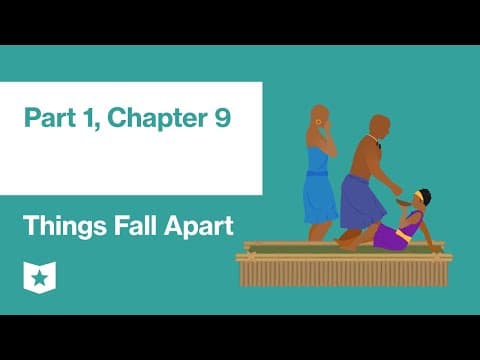
In Chapter 9 of Chinua Achebe's Things Fall Apart, the panic surrounding A Zima's illness reveals deep cultural beliefs about childhood mortality and the emotional struggles of a mother, Equi Fee, who has lost many children. Okonkwo's actions highlight his complex relationship with his family and the societal expectations of masculinity.
In Part 1, Chapter 9 of Chinua Achebe's seminal work, Things Fall Apart, we witness a moment of crisis that encapsulates the emotional and cultural complexities of the Igbo society. The chapter opens with Equi Fee, a character marked by tragedy, banging on Okonkwo's door in a state of panic, exclaiming that A Zima is dying. This urgent call for help sets the stage for a profound exploration of family dynamics, cultural beliefs, and the weight of past losses.
Equi Fee's frantic knocking is not just a call for assistance; it is a reflection of her deep-seated fears and the history of loss that haunts her. Okonkwo, recognizing her voice even before she speaks, understands the gravity of the situation. Equi Fee has endured the heart-wrenching loss of nine children before A Zima was born, which has left her bitter and despondent. The arrival of A Zima, who is now six years old, had initially brought love back into her life, but the specter of her past losses looms large as A Zima falls ill.
The chapter delves into the Igbo beliefs surrounding childhood mortality, particularly the concept of the Obon Jay. This term refers to children who die young and are believed to be evil spirits that return to their mothers' wombs to cause grief. The community's response to childhood illness is steeped in superstition and ritual. When A Zima fell ill, Okonkwo had previously called upon a medicine man who mutilated the corpse of Equi Fee's ninth child and buried it in the evil forest, a practice rooted in the belief that such actions could prevent the Obon Jay from returning.
The narrative reveals that A Zima's health issues are not isolated incidents but part of a larger pattern of fear and superstition that grips the community. The medicine man's earlier intervention, which involved finding and destroying a stone believed to link A Zima to the spirit world, had provided temporary relief. However, the recurrence of A Zima's illness raises questions about the efficacy of these cultural practices and the fragility of life.
Throughout the novel, Okonkwo is portrayed as a figure who represses his emotions, viewing them as feminine and weak. However, his reaction to A Zima's sickness reveals a different side of his character. In a moment of vulnerability, he rushes to gather ingredients to prepare medicine for her, demonstrating a deep affection for his child. This act of care contrasts sharply with his usual stoicism and highlights the internal conflict he faces between societal expectations of masculinity and his paternal instincts.
Equi Fee's history of losing children profoundly impacts her psyche as A Zima falls ill. The chapter poignantly illustrates how past traumas can resurface, influencing present actions and emotions. As Equi Fee grapples with the possibility of losing another child, the narrative invites readers to reflect on the broader implications of childhood mortality within the Igbo culture. The beliefs surrounding the Obon Jay and the rituals performed to combat these fears underscore the community's struggle to cope with loss and the lengths to which they will go to protect their children.
Chapter 9 of Things Fall Apart serves as a microcosm of the larger themes present in Achebe's work, including the intersection of personal tragedy and cultural beliefs. Through the lens of Equi Fee's panic and Okonkwo's complex emotions, readers gain insight into the profound impact of loss on family dynamics and the societal constructs that shape their responses to illness and mortality. As the narrative unfolds, it becomes clear that the struggle against the forces of fate and the weight of tradition are central to the human experience, resonating deeply within the context of the Igbo community.