Dante Alighieri's Divine Comedy, composed between 1304 and 1321, is a monumental poem that explores the realms of the afterlife through a rich tapestry of allegory, philosophy, and theology. Divided into three parts—Inferno, Purgatorio, and Paradiso—it reflects medieval thought and the journey of the soul towards God, guided by figures like Virgil and Beatrice. Written in the vernacular, it laid the foundation for the Italian language and remains a cornerstone of world literature.
La Divina Commedia, or The Divine Comedy, is widely regarded as the most significant poetic work of Dante Alighieri, composed approximately between 1304 and 1321, the year of the poet's death. This epic poem is structured in terza rima, consisting of three-line stanzas with eleven-syllable lines, following an intricate rhyme scheme of ABA BCB CDC. The work is divided into three cantiche: Inferno, Purgatorio, and Paradiso.
The Inferno comprises 34 cantos, with the first canto serving as a prologue. Both Purgatorio and Paradiso contain 33 cantos each, culminating in a total of 100 cantos. The Divine Comedy is not only considered the most important work of the medieval period but is also hailed by many as the greatest masterpiece of literature throughout history.
Interestingly, the title "Divina Commedia" was not established until the 15th century, inspired by the biography of Dante written by Boccaccio, who first used the adjective "Divina." Dante himself referred to his work as "comedia" while in Hell and as "poema sacro" or "sacred poem" when in Paradise alongside Beatrice.
Beatrice, the beloved of Dante, plays a crucial role in enabling the poet's allegorical and moral journey through the afterlife. She not only guides him through the three realms of the afterlife but also leads him to the ultimate vision of God. Dante narrates his journey as if it were a real experience, representing a long path of redemption and recovery through allegory, symbolism, and analogy, in line with medieval traditions.
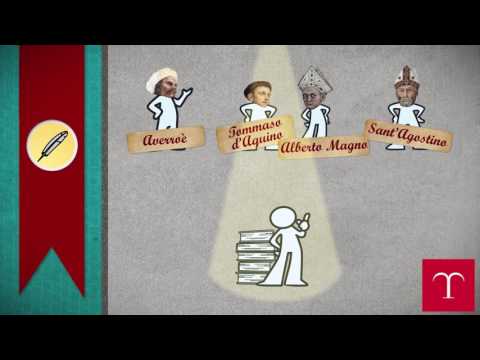
Dante constructs a theological and philosophical system within the Comedy, drawing from Aristotelian philosophy as interpreted by the scholastics of the 10th century, infused with mysticism. Influential figures such as Thomas Aquinas and Albertus Magnus, who were inspired by St. Augustine, shaped this framework. Dante also incorporates ideas from Averroes, a prominent Arab philosopher, resulting in a rational yet deeply spiritual universe. In this system, reason can only reach its highest levels through faith, as not all truths can be explained by reason alone.
In the Divine Comedy, God is depicted as the driving force of the universe, whose love moves the nine heavens, each rotating at different speeds and governed by angelic hierarchies. At the center of the cosmos lies Earth, which remains sensitive to celestial influences. This hierarchical structure is characteristic of medieval thought.
At the core of the Earth is Lucifer, who is trapped after his rebellion, ruling over Hell, which is located near Jerusalem. Conversely, in the southern hemisphere lies Purgatory, a mountain that hosts the terrestrial paradise at its summit, where God placed man after creation. Within these three realms exist three categories of souls: the damned, the penitent, and the blessed.
Dante himself assigns souls to their respective realms, allowing him to express political judgments based on his experiences and beliefs. The journey begins on April 8, 1300, during a Jubilee year, reflecting the urgent need for justice in a time marked by strife and corruption. Dante redeems the supreme civil values of the ancient pagan world by offering them the decisive support of divine grace. His strong judgments on the souls of the afterlife are illuminated by hope for salvation through divine providence.
Dante's poem is notable for being written in the vernacular, which began to spread beyond Florence due to the influence of Latin literature. The spoken language, rooted in Tuscan elements, was enriched with expressions and idioms from northern and Romance languages. This linguistic vibrancy, a product of Dante's genius and imagination, stems from a careful study of the history of the vernacular, as evidenced by his work "De Vulgari Eloquentia." The Florentine vernacular thus emerged as a dominant language, paving the way for the Italian language as we know it today.
In conclusion, Dante Alighieri's Divine Comedy is not just a literary masterpiece but a profound exploration of the human condition, morality, and the quest for divine truth. Through his encounters with various souls, including the famous lines of Ulysses, Dante urges readers to consider their own existence: "Considerate la vostra semenza: fatti non foste a viver come bruti, ma per seguire virtute e conoscenza." This call to virtue and knowledge remains a timeless message that resonates with readers across generations.