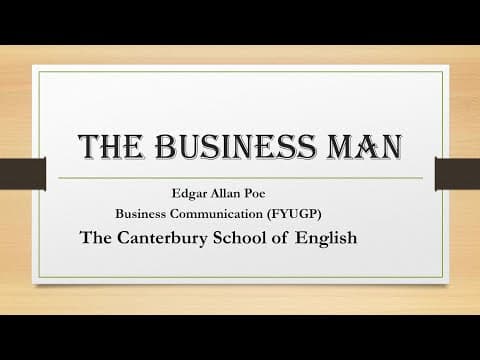
This blog post delves into Edgar Allan Poe's story 'The Business Man', exploring its themes of superficiality in business, the character of Peter Profit, and the critique of economic pursuits through a narrative lens.
Edgar Allan Poe, born on January 19, 1809, in Boston, Massachusetts, is renowned for his contributions to literature, particularly in the genres of detective fiction, horror, and psychological thrillers. His works, including classics like "The Raven" and "The Tell-Tale Heart," have left an indelible mark on American literature. In this blog post, we will explore one of his lesser-known stories, "The Business Man," which critiques the superficiality of economic pursuits through the character of Peter Profit.
Poe's educational journey was tumultuous; he briefly attended the University of Virginia but left due to financial difficulties and gambling debts. Despite facing numerous challenges, including the tragic death of his young wife Virginia, Poe's literary genius flourished. He is often regarded as a pioneer of modern horror and mystery, influencing notable writers such as H.P. Lovecraft and symbolists like Baudelaire.
"The Business Man" is a satirical tale that critiques the nature of business and the ethical dilemmas faced by individuals in pursuit of profit. The story features a first-person narrator who presents himself as a methodical businessman, emphasizing his commitment to accuracy and organization. This character, Peter Profit, embodies the archetype of a businessman whose ventures are often peculiar and unethical.
Peter Profit is portrayed as a regular businessman who prides himself on his strong habits and methodical approach. However, his ventures reveal a lack of integrity and meaningful purpose. For instance, he engages in various unusual and unethical business practices, showcasing a superficial understanding of success.
Profit's business methods include:
These examples illustrate how Profit's approach to business is rooted in superficiality rather than substance, underscoring Poe's critique of the economic pursuits of his time.
Poe's narrative critiques the superficial nature of business, where success is often measured by profit rather than integrity. The character of Peter Profit serves as a representation of this critique, as his ventures lack depth and ethical consideration.
Through the absurdity of Profit's business methods, Poe highlights the ridiculous lengths to which individuals may go in the name of profit. This serves as a commentary on the moral implications of prioritizing financial gain over ethical considerations.
Edgar Allan Poe's "The Business Man" offers a profound critique of the superficiality and ethical dilemmas inherent in the pursuit of profit. Through the character of Peter Profit, Poe illustrates the absurdity of certain business practices and challenges readers to reflect on the true meaning of success. As we navigate our own economic landscapes, the lessons from Poe's narrative remain relevant, urging us to consider the integrity behind our pursuits.