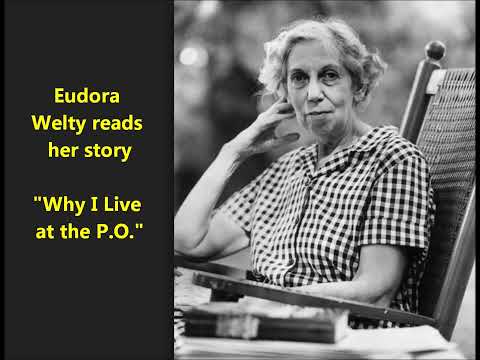
Eudora Welty's story 'Why I Live At The P.O.' delves into the complexities of family relationships through the lens of a postmistress in China Grove. The narrative unfolds the tensions between the protagonist and her sister Stella-Rondo, highlighting themes of jealousy, misunderstanding, and the quest for independence. As the protagonist navigates her family's chaos, she ultimately finds solace in her decision to live at the post office, symbolizing her desire for autonomy and peace amidst the r
Eudora Welty's short story "Why I Live At The P.O." presents a vivid exploration of family dynamics, jealousy, and the quest for independence. Set in the small town of China Grove, the narrative is told from the perspective of a postmistress who finds herself at odds with her family, particularly her sister, Stella-Rondo. This blog post will delve into the key themes and character interactions that make this story a compelling examination of familial relationships.
The story begins with the protagonist, who lives harmoniously with her family until her sister Stella-Rondo returns home after separating from her husband. This unexpected return disrupts the family balance and sets off a series of conflicts. The protagonist's initial contentment is quickly overshadowed by Stella-Rondo's manipulative behavior, which serves to alienate her from their father, Papa Daddy.
Stella-Rondo is portrayed as a spoiled and self-centered character, having always received everything she wanted. Her return home with her adopted child, Shirley-T, creates tension, especially when she insists on keeping the child's origins a secret. The protagonist's observations about Shirley-T's resemblance to their father only fuel the conflict, as Stella-Rondo becomes defensive and accusatory.
A pivotal moment in the story occurs during a family dinner, where Stella-Rondo's manipulation becomes evident. She turns Papa Daddy against the protagonist by falsely claiming that she criticized his beard. This scene highlights the protagonist's frustration and the absurdity of their family dynamics, as misunderstandings escalate into full-blown arguments.
Uncle Rondo, another family member, adds a layer of humor to the story. His drunken antics and peculiar behavior provide comic relief amidst the tension. However, his interactions with the protagonist also reflect the family's dysfunction, as he unwittingly becomes a pawn in Stella-Rondo's schemes. His character serves to illustrate the absurdity of the family's conflicts, as he oscillates between supporting the protagonist and siding with Stella-Rondo.
As the story progresses, the protagonist's frustration with her family's behavior culminates in her decision to live at the post office. This choice symbolizes her desire for independence and a break from the chaos of family life. The post office becomes a sanctuary for her, a place where she can escape the constant bickering and misunderstandings that plague her home.
The post office represents more than just a physical space; it embodies the protagonist's quest for autonomy. By choosing to live there, she asserts her independence and takes control of her life. The post office, with its limited mail and interactions, becomes a refuge where she can define her own identity away from the familial chaos.
Throughout the story, themes of jealousy and misunderstanding are prevalent. Stella-Rondo's jealousy of the protagonist's relationship with their father and her attempts to undermine her create a toxic environment. The protagonist's observations about her sister's behavior reveal the deep-seated rivalries that exist within families, often leading to miscommunication and conflict.
Eudora Welty's "Why I Live At The P.O." is a poignant exploration of family dynamics, highlighting the complexities of sibling relationships and the quest for personal autonomy. The protagonist's journey reflects the struggles many face in navigating familial expectations and the desire for independence. Ultimately, her decision to live at the post office serves as a powerful statement about the importance of carving out one's own space in the world, even amidst the chaos of family life. Through this narrative, Welty invites readers to reflect on their own family dynamics and the ways in which they seek independence and understanding within their relationships.