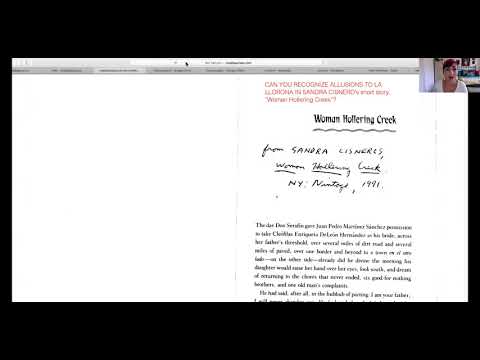
This blog post delves into Sandra Cisneros' 'Woman Hollering Creek,' highlighting its connections to Mexican American folklore, the character of La Llorona, and the themes of love, betrayal, and cultural identity. Through a reading of the story, we explore how Cisneros weaves folklore into her narrative, reflecting the experiences of Mexican American women.
In this blog post, we will explore one of the most beloved short stories by Sandra Cisneros, titled "Woman Hollering Creek." This story is part of a collection that connects readers to the rich tapestry of Mexican American folklore and culture. Cisneros, a national treasure, is known for her ability to weave everyday experiences with deeper cultural narratives, making her work resonate with a wide audience.
Folklore is often perceived as tales of deities or mythical beings, but it is fundamentally about the beliefs and stories of everyday people. It serves as a medium through which cultural values and experiences are expressed. In the context of Mexican American literature, folklore plays a crucial role in shaping narratives that reflect the complexities of identity, love, and betrayal.
One of the most prominent figures in Mexican folklore is La Llorona, the weeping woman who is often used to instill fear and convey moral lessons. In Cisneros' work, La Llorona serves as a powerful allusion that connects the protagonist's experiences to broader themes of motherhood, loss, and cultural identity. The character of La Llorona embodies the pain of betrayal and the consequences of love gone awry, making her a fitting reference point in the exploration of the protagonist's journey.
As we delve into the story, we will pause at various moments to reflect on how Cisneros incorporates allusions to La Llorona and other elements of folklore. The narrative begins with the character of Felice, who is introduced as she prepares for her wedding. The story captures her dreams and aspirations, juxtaposed with the harsh realities of her life.
Cisneros explores the theme of love through Felice's relationship with her husband, Juan Pedro. Initially, Felice dreams of a passionate love, reminiscent of the romantic ideals portrayed in telenovelas. However, as the story unfolds, we witness the deterioration of their relationship, marked by betrayal and violence. This shift in tone reflects the complexities of love, where the initial excitement can sour into pain and disappointment.
The narrative also highlights the role of community and gossip in shaping Felice's identity. The women in her life, including her neighbors, contribute to the cultural fabric that influences her decisions and perceptions. Their conversations often revolve around traditional gender roles and expectations, which Felice grapples with throughout the story.
The creek itself serves as a powerful symbol within the story. Named after La Llorona, it represents the intersection of joy and sorrow, love and loss. As Felice navigates her life, the creek becomes a metaphor for her emotional state, reflecting her struggles and desires. The act of hollering, akin to La Llorona's cries, signifies a yearning for freedom and expression amidst the constraints of her reality.
Sandra Cisneros' "Woman Hollering Creek" is a poignant exploration of identity, love, and the influence of folklore in shaping personal narratives. Through the lens of La Llorona and the rich cultural backdrop of Mexican American life, Cisneros invites readers to reflect on their own experiences and the stories that define them. The story serves as a reminder of the power of folklore in articulating the complexities of human emotions and relationships, making it a timeless piece of literature that resonates with many.