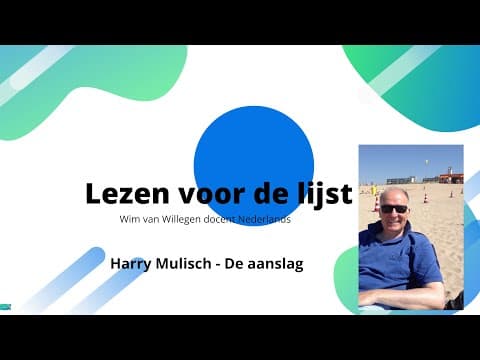
This blog post provides an in-depth analysis of Harry Mulisch's novel 'De Aanslag', exploring its structure, themes of guilt and responsibility, and the historical context that shapes the narrative. It discusses the protagonist's journey and the moral complexities presented in the story, emphasizing the intricate relationship between personal and collective histories.
Harry Mulisch's novel, 'De Aanslag', published in 1982, is a profound exploration of guilt, responsibility, and the impact of historical events on personal lives. This blog post delves into the structure of the novel, its key themes, and the historical context that informs the narrative.
The novel is structured in a classical tragic format, consisting of a prologue and five episodes:
The prologue and these episodes mirror the construction of a classical tragedy, where the protagonist, Anton Steenwijk, grapples with his past, having lost his family in the aftermath of the assassination.
A central theme of 'De Aanslag' is the complex nature of guilt and responsibility. The novel raises critical questions about who is truly guilty in the context of war and violence. The characters involved in the assassination and its aftermath each bear a different weight of responsibility:
The historical events surrounding the assassination play a crucial role in shaping the characters' lives and decisions. The novel reflects on how the past continues to influence the present, as Anton's journey is marked by the lingering effects of the trauma he experienced. The prologue sets the stage for this exploration, using the metaphor of a ship cutting through water to illustrate the complex interplay of past events and their repercussions.
Anton’s quest for truth is depicted as an involuntary journey. His health issues compel him to confront his past, leading him to uncover the layers of his family's history and the circumstances surrounding their deaths. The narrative emphasizes the role of chance in this search, as Anton encounters key figures from his past unexpectedly, which propels him further into his investigation.
Harry Mulisch's 'De Aanslag' is not just a story about a tragic event; it is a profound commentary on the nature of guilt, responsibility, and the complexities of human morality. The novel challenges readers to reconsider simplistic notions of good and evil, illustrating that the truth is often obscured by the shadows of history. Ultimately, it offers a glimmer of hope, as Anton learns to face his past and look towards the future, culminating in the peace demonstrations that symbolize a collective yearning for reconciliation.
This exploration of 'De Aanslag' reveals the intricate layers of Mulisch's writing, making it a significant work that continues to resonate with readers today. As we reflect on the themes of the novel, we are reminded of the importance of understanding our histories and the moral complexities that shape our lives.