In a conversation about his debut novel, Moriel Rothman-Zecher discusses the complexities of identity, the Israeli-Palestinian conflict, and the role of literature in understanding these themes. The novel, which intertwines personal and political narratives, challenges readers to confront multiple truths and the nuances of human relationships amidst conflict.
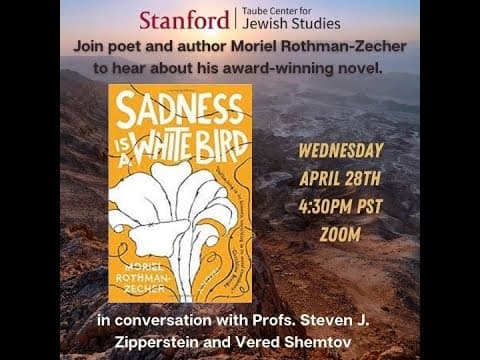
In a recent discussion hosted by the Stanford Jewish Studies program, Moriel Rothman-Zecher, an Israeli-American author, shared insights about his debut novel, Sadness is a White Bird. The conversation, led by Charlotte from the Robert H. Smith Center for Jewish Studies, featured Rothman-Zecher's reflections on identity, the Israeli-Palestinian conflict, and the power of literature to navigate complex emotional landscapes.
Moriel Rothman-Zecher, born in Jerusalem and currently residing in Ohio, is recognized as an award-winning novelist, poet, essayist, and educator. His novel has garnered significant acclaim, including being a finalist for the National Jewish Book Award and winning the National Book Foundation's 5 Under 35 honor. Rothman-Zecher's work is characterized by its poetic language and deep emotional resonance.
Rothman-Zecher's novel is noted for its lyrical prose, which blends elements of poetry and narrative. During the discussion, he read an excerpt that illustrates the novel's rich imagery and emotional depth. The story revolves around Jonathan, the narrator, who reflects on his relationships and memories, particularly with two Palestinian twins, Laith and Nareen. This relationship serves as a lens through which Rothman-Zecher explores themes of love, identity, and conflict.
A significant point of discussion was the nature of the novel as a fictional autobiography. Rothman-Zecher clarified that while the protagonist shares similarities with his own life, the narrative is not a direct retelling of his experiences. Instead, it serves as a counterfactual exploration of what might have happened had he made different choices regarding his identity and political beliefs. This approach allows for a deeper examination of the complexities surrounding Israeli and Palestinian identities.
Rothman-Zecher emphasized the importance of literature in facilitating conversations about identity and conflict. He views his novel as a dialogue with the works of poets like Mahmoud Darwish, whose poem "A Soldier Dreams of White Lilies" profoundly influenced his understanding of the Israeli-Palestinian conflict. The novel engages with the idea that literature can transcend political boundaries and foster empathy among individuals from different backgrounds.
The discussion also touched on the portrayal of masculinity in the novel. Rothman-Zecher's characters navigate their identities in a world where traditional notions of masculinity are challenged. Jonathan's fluidity in his sexual and national identity reflects a broader commentary on the complexities of human relationships in the context of conflict.
Rothman-Zecher's exploration of historical narratives, particularly in relation to his grandfather's experiences during the Holocaust, adds depth to the story. The novel grapples with the weight of history and its impact on contemporary identities, illustrating how personal and collective histories shape individual experiences.
In conclusion, Moriel Rothman-Zecher's Sadness is a White Bird invites readers to engage with the multifaceted nature of identity and conflict. Through poetic language and a nuanced narrative, the novel challenges simplistic interpretations of the Israeli-Palestinian conflict and encourages a deeper understanding of the human experiences that underpin it. As Rothman-Zecher aptly noted, literature has the power to illuminate the multiplicity of truths and pains that exist within us all, fostering empathy and connection in a divided world.