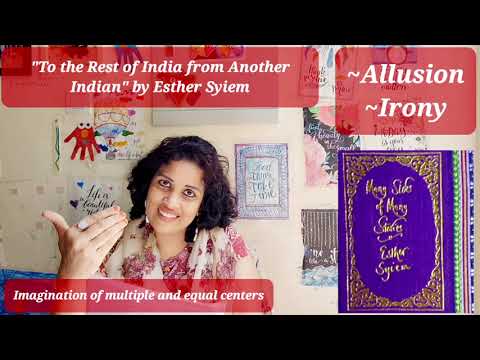
Esther Syiem's poem "To the Rest of India from Another Indian" reflects on the cultural identity of the Khasi people in Northeast India, contrasting their traditions and beliefs with mainstream Indian narratives. Through rich imagery and references to folklore, Syiem invites readers to embrace the diversity of Indian culture and recognize the importance of preserving indigenous identities.
Esther Syiem's poem "To the Rest of India from Another Indian" serves as a poignant exploration of cultural identity and the complexities of belonging within the diverse tapestry of India. Through her verses, Syiem articulates the unique experiences of the Khasi people from Northeast India, contrasting their traditions with the more widely recognized narratives of Indian culture. This blog post delves into the themes, imagery, and cultural significance embedded in Syiem's work.
The poem opens with a thought-provoking question about the familiarity of the names "Ram" and "Sita," iconic figures from the Hindu epics, the Ramayana and the Mahabharata. Syiem highlights the immediate recognition these names evoke among Indians, regardless of their regional or religious backgrounds. In contrast, she introduces the idea that many may not be familiar with the names and stories from her own culture, prompting readers to reflect on their understanding of Indian identity.
Syiem writes, "We have no Rama, no Sita, no Arjuna; ours are differently named." This line underscores the poet's assertion that the Khasi people have their own heroes and narratives that are often overlooked. By referencing the epic battles of Kurukshetra and Lanka, she emphasizes that while these events are central to mainstream Indian culture, the Khasi people have their own struggles and histories that deserve recognition.
The poem vividly describes the mountainous terrain of the Northeast, where the Khasi people reside. Syiem paints a picture of their homeland, rich in natural beauty and cultural significance. She contrasts the grand temples of mainstream India with the oral traditions of her people, who do not rely on physical structures for their spirituality. Instead, their beliefs are deeply rooted in nature and folklore, passed down through generations.
Syiem emphasizes the importance of nature in Khasi culture, stating that every stream, pond, and lake holds significance. Unlike the reverence given to the Ganges in mainstream Hinduism, the Khasi people view all bodies of water as sacred. This perspective reflects a profound connection to the environment, which is integral to their identity.
The poet invites readers to explore the rich tapestry of Khasi folklore, filled with magical beings and stories that reflect their worldview. She challenges the audience to engage with her culture, asking if they are willing to learn the names and legends that shape her people's identity.
Syiem's poem serves as a call to action, urging readers to embrace the diversity of Indian culture. She questions the dominant narratives that often marginalize voices from the Northeast, asking, "Are you ready to embrace the so-called other?" This invitation is not just for recognition but for a deeper understanding of the complexities that define Indian identity.
Throughout the poem, Syiem addresses the challenges faced by the Khasi people, including the loss of language and culture due to colonization and modernization. She recounts the story of how the Khasi script was lost, symbolizing a broader struggle against cultural erasure. The poet emphasizes the need to document and preserve indigenous traditions, highlighting the importance of storytelling in maintaining cultural heritage.
Esther Syiem's "To the Rest of India from Another Indian" is a powerful exploration of identity, culture, and the need for recognition of diverse narratives within India. Through her evocative imagery and rich references to Khasi folklore, Syiem invites readers to reflect on their understanding of what it means to be Indian. Her poem serves as a reminder that the tapestry of Indian culture is woven from many threads, each deserving of respect and acknowledgment. By embracing these diverse narratives, we can foster a more inclusive understanding of our shared heritage.