This blog post delves into Saadat Hasan Manto's pen sketch of Ismat Chughtai, highlighting their friendship, literary contributions, and the unique style of Manto's writing that captures the essence of Chughtai's life and work.
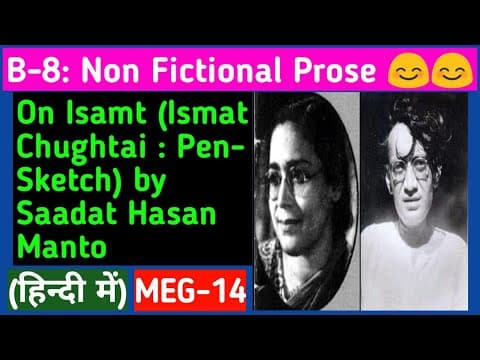
In this blog post, we will discuss a significant literary work titled "On Ismat" (originally in Urdu as "Ismat Chughtai: Pen-Sketch") written by the renowned writer Saadat Hasan Manto in 1948. This piece serves as a biographical sketch of Ismat Chughtai, a prominent Indian female writer, and reflects the deep friendship and mutual respect between Manto and Chughtai.
A pen sketch is a unique genre in Urdu literature that provides a biographical account of a celebrity or writer, detailing their personal life, interests, and daily experiences. Unlike a simple biography, a pen sketch is crafted to be engaging and often includes imaginative dialogues and critical commentary on the subject's work.
Saadat Hasan Manto was born on May 11, 1912, in Ludhiana, Punjab, British India, and passed away on January 18, 1955, in Lahore, Pakistan. Manto was a prolific writer known for his short stories, plays, and screenwriting. His works often tackled bold and controversial topics, reflecting the harsh realities of society. Manto's notable works include "Toba Tek Singh," "Thanda Gosht," "Bhookh," and "Kali Salwar."
Manto's writing style was characterized by its fearless exploration of themes that many of his contemporaries avoided. He faced numerous legal challenges due to accusations of obscenity, yet he remained steadfast in his commitment to portraying the truth of society.
Ismat Chughtai, a contemporary of Manto, was also a significant figure in Urdu literature. The pen sketch written by Manto not only highlights Chughtai's life but also reflects their close friendship. Both writers were known for their progressive thoughts and often faced criticism from orthodox members of society.
Manto and Chughtai shared a deep bond, characterized by mutual respect and admiration. They were contemporaries who often engaged in discussions about literature and society. Despite their different life paths, their friendship remained strong, even during the tumultuous times of partition when Manto moved to Pakistan.
In 1968, Chughtai wrote her own pen sketch titled "Mera Dost Mera Dushman" (My Friend, My Enemy) about Manto, showcasing the profound impact he had on her life and work.
Manto's pen sketch of Chughtai is structured to include biographical details, historical context, and imaginative dialogues. The narrative is enriched with literary criticism of Chughtai's work, providing readers with a comprehensive view of her contributions to Urdu literature.
The pen sketch is set against the backdrop of the Indian independence movement, particularly around 1942, and chronicles Chughtai's literary career, including the publication of her famous short story "Lihaf."
Manto presents Chughtai's personality as strong-willed and determined. He captures her rebellious spirit and her refusal to compromise on her ideals. The sketch illustrates her as a fearless writer who tackled intimate and bold subjects in her work.
Manto employs an informal and conversational style in the pen sketch, making it accessible and engaging for readers. His use of humor and witty dialogues adds depth to the narrative, allowing readers to connect with both writers on a personal level.
Saadat Hasan Manto's pen sketch of Ismat Chughtai is a remarkable tribute to a fellow writer and friend. It not only highlights Chughtai's literary achievements but also reflects the complexities of their friendship and the societal challenges they faced as progressive writers. Through this work, Manto immortalizes Chughtai's legacy in Urdu literature, ensuring that her contributions are remembered and celebrated.