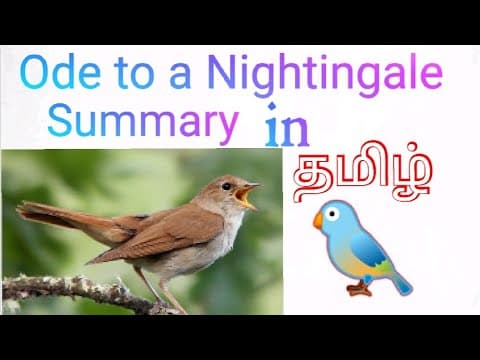
This blog post provides a comprehensive summary of John Keats' poem 'Ode to a Nightingale,' exploring its themes, structure, and the emotional journey it encapsulates.
John Keats' "Ode to a Nightingale" is one of the most celebrated poems in English literature, renowned for its rich imagery and profound themes. This blog post delves into the essence of the poem, summarizing its key elements and exploring the emotional landscape that Keats navigates.
Written in 1819, "Ode to a Nightingale" reflects Keats' deep appreciation for nature and the fleeting nature of life. The poem is structured as an ode, a lyrical form that expresses deep feelings and thoughts, often addressing a particular subject. In this case, the subject is the nightingale, a symbol of beauty and transcendence.
One of the central themes of the poem is the contrast between the harsh realities of life and the idealized beauty represented by the nightingale. Keats uses the nightingale's song as a metaphor for the eternal beauty of art and nature, which stands in stark contrast to human suffering and mortality.
Keats grapples with the inevitability of death throughout the poem. The nightingale, which seems to live in a timeless realm, serves as a reminder of the transience of human life. This theme resonates deeply with Keats, who was acutely aware of his own mortality due to his health struggles.
Imagination plays a crucial role in the poem. Keats often retreats into his imagination to escape the pain of reality. The nightingale's song transports him to a world of beauty and joy, highlighting the power of art and imagination to provide solace in difficult times.
The poem consists of eight stanzas, each varying in length, which contributes to its lyrical quality. Keats employs a rich array of literary devices, including vivid imagery, personification, and symbolism. The nightingale itself is personified, allowing readers to connect with its song on a deeper emotional level.
The poem begins with a sense of longing and melancholy as Keats listens to the nightingale's song. He expresses a desire to escape the pain of the world and join the bird in its eternal bliss. As the poem progresses, he reflects on the nature of happiness and the inevitability of sorrow, ultimately returning to the reality of his own existence.
In "Ode to a Nightingale," John Keats masterfully captures the tension between the beauty of art and the harshness of reality. Through his exploration of themes such as mortality, imagination, and the contrast between idealism and reality, Keats invites readers to reflect on their own experiences of beauty and suffering. This poem remains a poignant reminder of the transient nature of life and the enduring power of art to uplift the human spirit.