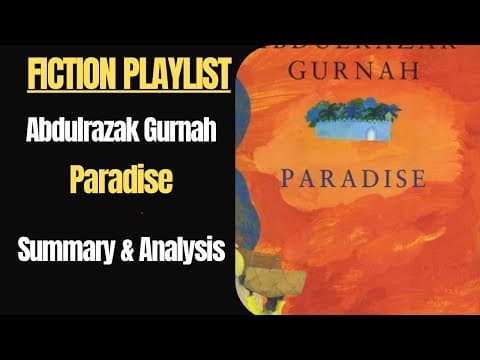
This blog post provides a comprehensive summary and analysis of Abdulrazak Gurnah's novel 'Paradise', exploring its themes, characters, and the historical context of colonialism in East Africa. It highlights the protagonist Yusuf's journey, the complexities of the characters, and the significance of the title 'Paradise' in relation to the narrative.
In this blog post, we will delve into Abdulrazak Gurnah's novel "Paradise", a significant work in postcolonial literature. This discussion is inspired by a request from students at CD Muhammad Bin Abdullah University in Fez, Morocco. Although I have just finished reading the novel, I aim to provide a thoughtful analysis of its themes, characters, and the historical context in which it is set.
Abdulrazak Gurnah, born in the former sultanate of Zanzibar (now part of Tanzania), is a Nobel Prize-winning author recognized for his contributions to literature. He has published 14 novels and has taught at the University of Kent, where he is now a professor emeritus. Gurnah gained international acclaim after winning the Nobel Prize in 2021, marking a significant milestone in his literary career.
"Paradise" is set during the late 1880s to 1914, a period leading up to the First World War. This era is crucial as it reflects the socio-political dynamics of East Africa, particularly the impact of colonialism.
The novel unfolds in present-day Tanzania, primarily in coastal towns, a major city, and the interior regions of East Africa. The geographical backdrop includes notable landmarks such as Mount Kilimanjaro and Lake Victoria, which play a significant role in the narrative.
The story follows Yusuf, a 12-year-old boy, who is taken by his uncle Aziz, an Arab trader, from his coastal town to the city. Initially unaware of the true nature of his relationship with Aziz, Yusuf embarks on a journey that leads him into the complexities of trade, slavery, and personal identity. The plot intricately weaves Yusuf's experiences as he navigates life under Aziz's control, his friendships, and his coming-of-age journey.
Yusuf is the protagonist whose beauty and innocence are central to the narrative. His character draws parallels with the biblical and Quranic figure of Joseph, symbolizing purity and the struggles of youth.
Aziz, Yusuf's uncle, is a multifaceted character. He embodies both benevolence and moral ambiguity, as he engages in practices that exploit the vulnerable, including the enslavement of children to settle debts.
Khalil, a young man working with Yusuf, serves as a mentor and friend. He provides insight into the harsh realities of their lives and the power dynamics at play.
The novel features several other characters, including Hamid, a shopkeeper, and Amina, Khalil's sister, who becomes a significant figure in Yusuf's life. Each character contributes to the exploration of themes such as power, identity, and the impact of colonialism.
The novel presents a nuanced view of colonialism, particularly the German presence in East Africa. Through the eyes of the native characters, Gurnah critiques the brutality and dehumanization inherent in colonial rule.
Yusuf's journey is also one of self-discovery. As he grapples with his identity amidst the complexities of slavery and trade, the novel explores themes of belonging and the search for personal agency.
Gurnah highlights the tensions between different cultural groups, particularly the Arab and African identities. The narrative critiques the disdainful attitudes some Muslim characters hold towards native Africans, reflecting historical prejudices.
The theme of love, particularly the relationship between Yusuf and Amina, adds depth to the narrative. Their love story is intertwined with the larger themes of power and oppression, illustrating the challenges they face in a society that restricts their freedom.
The title "Paradise" carries multiple meanings within the context of the novel. It evokes the lush landscapes of East Africa, described as a paradise by characters like Hussein, the shopkeeper. However, the irony lies in the brutal realities faced by the characters, questioning whether this land can truly be considered a paradise when so much suffering occurs.
In conclusion, "Paradise" is a poignant exploration of a young boy's journey through the complexities of colonialism, identity, and love. Gurnah's narrative is rich with historical context and character depth, making it a significant contribution to postcolonial literature. The open-ended conclusion leaves readers contemplating the fates of Yusuf and Amina, encapsulating the uncertainties of life under colonial rule. This novel not only tells a story of personal growth but also serves as a critical reflection on the broader socio-political landscape of East Africa during a tumultuous period in history.