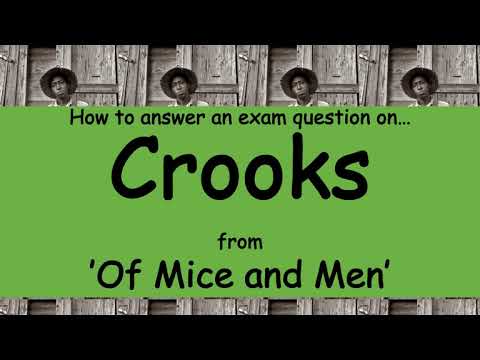
This blog post delves into the character of Crooks from John Steinbeck's 'Of Mice and Men', examining his mistreatment, isolation, intelligence, and the broader societal implications of his experiences as an African American in the 1930s. It highlights the themes of racism, power dynamics, and the disillusionment with the American Dream.
In this analysis, we will explore the character of Crooks from John Steinbeck's novella, 'Of Mice and Men'. This examination will focus on various aspects of Crooks' character, including his mistreatment, isolation, intelligence, and the broader societal implications of his experiences as an African American in the 1930s.
Set approximately 50 years after the abolition of slavery in the United States, 'Of Mice and Men' reflects the persistent racism and dehumanization faced by African Americans. Crooks, the only black character in the novella, is emblematic of the struggles faced by black individuals during this time. Steinbeck uses Crooks' experiences to highlight the normalized racism that permeated society.
Crooks is introduced through derogatory terms and nicknames, such as "stable buck" and the n-word, which signify the dehumanizing treatment he receives on the ranch. His identity is overshadowed by these labels, indicating a lack of respect and recognition. The first mention of Crooks comes from Candy, who describes how the boss mistreats him, revealing the normalized racism of the time. The boss uses Crooks as a scapegoat for his frustrations, illustrating how deeply ingrained prejudices were accepted as part of everyday life.
Crooks' physical condition, characterized by a crooked back from a horse kick, symbolizes the crippling impact of living in a prejudiced society. His living conditions further emphasize his dehumanization; he sleeps in a harness room, separated from the other workers, on a bed of straw, akin to that of a horse. This setting reflects the segregation and isolation he experiences.
Crooks' powerlessness is evident in his interactions with others. He is subjected to threats from Curley's wife, who wields her limited power as a white woman to intimidate him. Her threat of lynching serves as a stark reminder of the very real dangers faced by black men during the 1930s. Crooks' response to her threat—his toneless agreement—highlights his fear and the extent of his vulnerability.
The social hierarchy on the ranch mirrors that of American society, where Crooks, as a black man, occupies the lowest position. The economic crisis of the time disproportionately affected African Americans, with high unemployment rates and systemic discrimination further entrenching their marginalization.
Crooks' isolation is not only physical but also emotional. He admits to Lenny that loneliness makes him sick, revealing the profound impact of his social exclusion. His living situation, separate from the other men, symbolizes the broader segregation enforced by Jim Crow laws, which legally sanctioned discrimination against African Americans.
Despite his aloof demeanor, Crooks is deeply affected by his circumstances. His intelligence is evident in his possession of books, including a copy of the California civil code and a dictionary, indicating his desire to educate himself about his rights. However, the frustration he feels towards the legal system reflects the futility of his efforts in a society that systematically oppresses him.
Crooks' perspective on the American Dream is one of disillusionment. He expresses skepticism about the possibility of achieving dreams, stating, "nobody never gets to heaven and nobody gets no land." This sentiment underscores the harsh reality faced by many during the Great Depression, where dreams of prosperity were often unattainable.
His brief moment of hope when he contemplates joining George and Lenny's dream of owning land is quickly extinguished by the harsh realities of his life. Unlike other characters who cling to their dreams, Crooks is robbed of this privilege, highlighting the additional burdens placed on marginalized individuals.
Steinbeck crafted Crooks' character to shed light on the mistreatment of African Americans and challenge prevailing stereotypes of the time. Through Crooks, he critiques the brutality of American society and questions the validity of the American Dream, particularly for those who are marginalized.
In summary, Crooks serves as a powerful symbol of the struggles faced by African Americans in the 1930s, embodying themes of racism, isolation, and the quest for dignity in a society that denies it. Steinbeck's portrayal invites readers to reflect on the injustices of the past and their lingering effects in contemporary society.