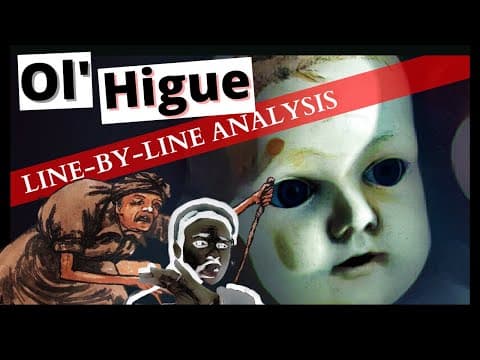
The poem 'Ol' Higue' delves into the life of a Caribbean folklore character, exploring themes of identity, social isolation, and the human tendency to seek scapegoats for tragedy. Through the voice of the hag, the poem reveals her struggles and the societal roles that shape perceptions of good and evil.
The poem 'Ol' Higue' presents a disturbing yet intriguing character from Caribbean folklore. The Ol' Higue is depicted as an old woman who embodies traits of a shape-shifter, witch, and vampire. Known by various names across the Caribbean, such as Asukuna, Jumbi, and Baku, this character is notorious for her desire to drink the blood of babies. This blog post will analyze the poem, exploring its themes, language, and the deeper meanings behind the Ol' Higue's existence.
The Ol' Higue is a complex figure who transforms into a ball of fire at night, seeking out her victims. During the day, she blends in with the community, appearing as a regular old woman. The poem opens with a powerful voice that challenges the reader's perception of her actions. The Ol' Higue expresses her disdain for her nightly escapades, questioning the purpose of her existence and the societal beliefs surrounding her character.
The poem is written in English but is infused with Guyanese Creole, which adds authenticity and depth to the narrative. The use of Creole reflects the rural Caribbean setting, where folklore and superstition thrive. This linguistic choice enhances the reader's immersion in the story, making the Ol' Higue's experiences more relatable and vivid.
The Ol' Higue grapples with her identity throughout the poem. She questions whether she enjoys her actions or if she is simply a product of her nature. This raises broader questions about identity: Can individuals change, or are they bound by their circumstances? The Ol' Higue's struggle reflects the human condition, where societal expectations often dictate one's role.
The Ol' Higue is portrayed as an outcast, feared and misunderstood by society. This theme resonates with many individuals who face alienation due to their identities, whether due to race, religion, or past mistakes. The poem invites readers to empathize with those who are marginalized and to consider the societal structures that contribute to their isolation.
The Ol' Higue's desire for baby blood serves as a metaphor for deeper human cravings. She expresses frustration at her addiction, lamenting that she would prefer to consume something more substantial, like seasoned blood pudding. This imagery highlights the irony of her situation: while she is condemned for her actions, society itself engages in similar forms of consumption, albeit in different ways.
A significant aspect of the poem is the Ol' Higue's role as a scapegoat for mothers who lose their children. The hag suggests that her existence provides a means for mothers to cope with their grief by directing their anger towards her. This dynamic reflects a broader societal tendency to seek someone to blame for tragedies, allowing individuals to avoid confronting their own guilt or helplessness.
In the concluding lines, the Ol' Higue asserts that as long as mothers exist, she will also endure. This statement underscores the cyclical nature of blame and tragedy in human life. The poem challenges readers to reflect on their own roles within society and the responsibilities that come with them. It raises questions about purpose and identity, encouraging individuals to consider whether they are content with the roles they play.
The poem 'Ol' Higue' serves as a powerful exploration of identity, social isolation, and the human tendency to seek scapegoats for tragedy. Through the voice of the Ol' Higue, readers are invited to empathize with her struggles while also reflecting on their own societal roles. Ultimately, the poem challenges us to confront the complexities of our identities and the narratives we create around them.