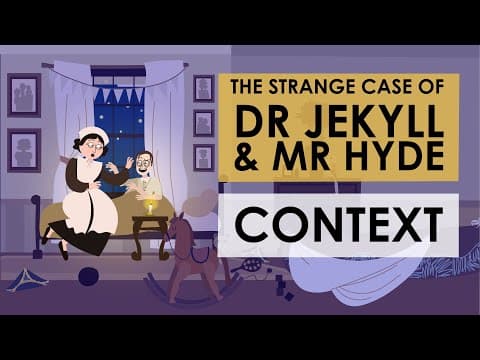
This blog post delves into the context of Robert Louis Stevenson's 'Dr Jekyll and Mr Hyde', exploring themes of duality, loyalty, the supernatural, and drug addiction, all set against the backdrop of Victorian England.
In Robert Louis Stevenson's novella, Dr Jekyll and Mr Hyde, the author intricately weaves themes of loyalty, duality, the supernatural, science and reason, as well as drug abuse and addiction. These themes reflect the complexities of the world during the Victorian era. This post will explore the life of Stevenson, the societal context of his writing, and the profound themes present in his work.
Born in 1850 in Edinburgh, Scotland, Robert Louis Stevenson was the only child of affluent middle-class parents. His father, Thomas, was a prominent lighthouse engineer, while his mother, Margaret, hailed from the Scottish gentry. Unfortunately, Stevenson inherited his mother's frail health, suffering from chronic coughs and infections, which led to a childhood spent largely indoors.
During this time, his nurse, Alison Cunningham, became his closest companion, and together they explored the realms of imagination through storytelling. As he grew older, Stevenson was expected to follow in his father's footsteps and pursue a career in engineering. However, upon attending the University of Edinburgh, he realized that engineering was not his passion. Instead, he compromised with his father and studied law, although he had no intention of practicing it.
Stevenson's rebellious spirit led him to a bohemian lifestyle, where he prioritized socializing and forming deep friendships over academic pursuits. His university years were marked by camaraderie with friends like Charles Baxter and Walter Farrier, who shared in his adventures around Edinburgh.
In Dr Jekyll and Mr Hyde, the bonds of friendship are central to the narrative. The characters Dr. Henry Jekyll, Gabriel Utterson, and Dr. Hastie Lanyon share a profound connection, reminiscent of Stevenson's own friendships. Utterson, in particular, embodies loyalty, risking his own safety to save Jekyll from the clutches of Hyde. This theme of unwavering friendship mirrors Stevenson's own experiences, particularly with his friend Charles Baxter, who served as his lawyer and confidant.
A significant theme in Stevenson's work is the concept of duality. Stevenson himself recognized his dual nature, referring to it as "myself and the other fellow." This internal conflict is mirrored in Dr. Jekyll, who embodies both respectable society and the darker impulses represented by Mr. Hyde. The novella suggests that humanity is not simply good or evil but rather a complex interplay of both.
Victorian London serves as the backdrop for this exploration of duality, showcasing stark contrasts between wealth and poverty, respectability and depravity. Jekyll's grand home juxtaposed with Hyde's sordid entrance symbolizes the hidden darkness that can exist within seemingly respectable individuals.
Stevenson employs supernatural elements to explore the boundaries of science and morality. Dr. Jekyll's transformation into Hyde is not merely a physical change but a metaphysical one, challenging the rational explanations of the time. The vague scientific details surrounding Jekyll's potion reflect the era's fascination with the unknown and the dangers of unchecked scientific exploration.
The Victorian era was marked by significant scientific advancements, yet it also grappled with the implications of these discoveries. The theories of Charles Darwin and Italian criminologist Cesare Lombroso, which suggested a biological basis for criminality, permeated societal consciousness. Stevenson’s portrayal of Hyde as a sub-human figure echoes these theories, inviting readers to confront the darker aspects of human nature.
Another critical theme in Dr Jekyll and Mr Hyde is the issue of drug abuse and addiction. During the Victorian period, access to drugs like opium and cocaine was widespread, and many individuals, including Stevenson himself, struggled with addiction. Jekyll's descent into addiction serves as a cautionary tale about the perils of substance abuse.
Stevenson's own experiences with medicinal cocaine, which he used to treat his chronic health issues, influenced his writing. The rapid decline of Dr. Jekyll into addiction and his transformation into Hyde symbolize the destructive nature of drug dependency, a theme that resonates with readers even today.
In conclusion, Robert Louis Stevenson's Dr Jekyll and Mr Hyde is a rich tapestry of themes that reflect the complexities of Victorian society. Through the exploration of loyalty, duality, the supernatural, and drug addiction, Stevenson invites readers to confront the darker aspects of human nature and the societal issues of his time. The novella remains a timeless reflection on the human condition, resonating with audiences across generations.