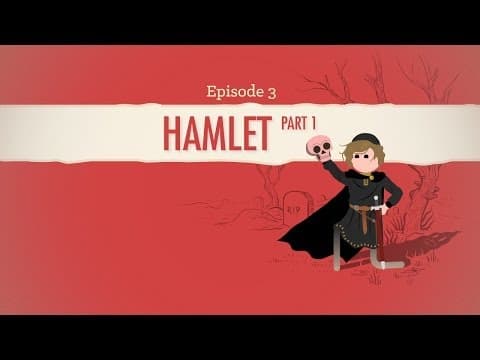
This blog post delves into Shakespeare's Hamlet, exploring its themes of revenge, justice, and identity, while examining its historical context, character dynamics, and the play's enduring significance in literature.
Hi, I’m John Green, and today we’re diving into one of the most significant works in English literature: Hamlet. Written by William Shakespeare between 1599 and 1602, The Tragedy of Hamlet, Prince of Denmark is often regarded as Shakespeare’s finest play, surpassing even his other notable works.
Some might argue that Hamlet is merely a lengthy tale about a man who struggles to make decisions. However, the complexity of Hamlet's character reveals that his indecision stems from the weight of his moral dilemmas rather than a lack of resolve. The play grapples with themes of justice, revenge, conscience, and the often uncomfortable dynamics of familial relationships.
Shakespeare's inspiration for Hamlet can be traced back to a medieval Scandinavian tale chronicled by Saxo Grammaticus. The story of Prince Amleth, who feigns madness to avenge his father's murder, serves as a foundation for Shakespeare's narrative. However, Shakespeare introduces significant ambiguity and depth, transforming Amleth into Hamlet, a character who embodies the struggles of human existence.
Hamlet is Shakespeare’s most performed play, known for its length and complexity. The play exists in three versions: two quartos (1603 and 1604) and the Folio edition (1623). The first quarto, often referred to as the "bad quarto," is believed to have been transcribed from memory by an actor who played minor roles, leading to inconsistencies in the text.
The plot centers around Hamlet, a graduate student who returns to Elsinore after his father's death, only to find his mother, Gertrude, married to his uncle, Claudius. Claudius ascends to the throne, despite Hamlet's rightful claim. Grieving and disillusioned, Hamlet dons black attire and engages in melancholic soliloquies, contemplating life and death.
The ghost of Hamlet's father appears, urging him to seek revenge against Claudius. Hamlet's response is to feign madness, leading to a series of events that culminate in tragedy. He stages a play to gauge Claudius's guilt, inadvertently kills Polonius, and faces the fallout of his actions, including Ophelia's descent into madness and eventual death.
Throughout the play, Denmark is depicted as a surveillance society, with characters constantly watching one another. Hamlet's assertion that "Denmark's a prison" reflects the oppressive atmosphere of Elsinore, where trust is scarce, and betrayal is rampant. This theme resonates with the political climate of Elizabethan England, where espionage and treachery were commonplace.
Hamlet's character embodies a duality, torn between his desire for revenge and his introspective nature. The play raises profound questions about identity and self-perception. Are we truly capable of change? When we look in the mirror, do we see our true selves? Hamlet's internal conflict is mirrored in the characters around him, particularly Ophelia, who represents the consequences of powerlessness.
The ghost of King Hamlet serves as a catalyst for the action, embodying the theme of unresolved justice. Hamlet grapples with the nature of the ghost's existence, questioning whether it is a benevolent spirit or a malevolent force. This uncertainty reflects Hamlet's broader struggle with the concepts of justice and morality.
Hamlet illustrates the destructive cycle of revenge, where each act of violence begets another. The ghost's demand for vengeance traps Hamlet in a moral quandary, leading to a tragic conclusion where nearly all characters meet their demise. This cycle underscores the futility of revenge and the moral complexities of justice.
Ultimately, Hamlet is a profound exploration of the human condition, encapsulating the struggles of decision-making, identity, and morality. Shakespeare's masterful use of language and ambiguity invites audiences to reflect on their own lives and the choices they make. As we continue to engage with this timeless work, we are reminded of the complexities of being human and the challenges of navigating our own moral landscapes.