Richard Connell's The Most Dangerous Game presents a thrilling narrative that delves into the philosophical questions of humanity, morality, and the instinctual nature of survival through the story of Rainsford, a hunter who becomes the hunted.
Richard Connell's 1924 short story, The Most Dangerous Game, is a gripping tale that not only entertains but also provokes deep philosophical questions about humanity, morality, and the instinctual nature of survival. The narrative follows the journey of Sanger Rainsford, an accomplished big game hunter, who finds himself on a treacherous island where the lines between hunter and hunted blur dramatically.
The story begins with Rainsford aboard a boat, discussing hunting with his fellow passenger, Whitney. Rainsford expresses his excitement about hunting jaguars in the Amazon, dismissing Whitney's concerns about the morality of hunting. Whitney argues that animals possess a sense of fear and pain, suggesting that hunting is not as noble as Rainsford believes. Ironically, Rainsford's dismissive attitude towards his prey sets the stage for his own harrowing experience.
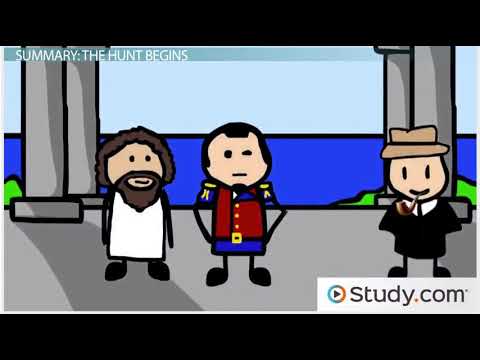
After accidentally falling overboard, Rainsford washes ashore on Ship-Trap Island, a place notorious for the disappearance of sailors. Here, he encounters General Zaroff, the island's owner, who reveals his twisted passion for hunting humans. Zaroff, a former Russian military leader, has grown bored with hunting animals and now seeks the thrill of hunting the most dangerous game: humans.
Zaroff offers Rainsford a deal: survive three days in the jungle, and he will be allowed to leave the island. Rainsford, confident in his skills, accepts the challenge. Armed with only a knife and his wits, he sets out to evade Zaroff, who is eager to hunt someone as skilled as himself.
On the first day, Rainsford uses his expertise to create false trails and hide in a tree, but Zaroff's superior hunting skills quickly become apparent when he casually smokes a cigarette beneath Rainsford's hiding spot. This moment underscores the danger Rainsford faces and the psychological game at play.
On the second day, Rainsford escalates his tactics by setting traps. He manages to wound Zaroff but is left to fend for himself as the general retreats to his mansion. The tension builds as Rainsford prepares for the final day of the hunt.
The final day brings new challenges as Zaroff unleashes a pack of hunting dogs. Rainsford's traps claim the lives of both a dog and Zaroff's servant, Ivan. Cornered and desperate, Rainsford leaps off a cliff into the sea, seemingly escaping Zaroff's clutches.
In a surprising twist, Rainsford survives the fall, swims to Zaroff's mansion, and confronts the general in his bedroom. The story culminates in a tense standoff where Rainsford declares, "I am still a beast at bay," leading to the ambiguous conclusion where he kills Zaroff and claims his bed. This ending raises questions about Rainsford's transformation and the moral implications of his actions.
Connell's story delves into several profound themes:
The narrative challenges the reader to consider what it means to be human. Rainsford initially believes that humans are rational beings, distinct from animals that act solely on instinct. However, as he becomes the hunted, he is forced to rely on his primal instincts for survival, blurring the lines between man and beast.
Zaroff's philosophy that there is no right or wrong, and that power dictates morality, is a central theme. Rainsford's eventual killing of Zaroff raises questions about the nature of justice and whether survival justifies one's actions. The story leaves readers pondering whether Rainsford will return to civilization or become the new master of Ship-Trap Island, perpetuating the cycle of violence.
The Most Dangerous Game is not just a thrilling adventure; it is a philosophical exploration of the human condition. Connell invites readers to reflect on the nature of humanity, the morality of hunting, and the instinctual drive for survival. The open-ended conclusion leaves us questioning the future of Rainsford and the moral implications of his choices, ensuring that the story resonates long after the final page is turned.