Mary Shelley's Frankenstein, born from a challenge during a summer of darkness, explores themes of creation, trauma, and the ethical implications of scientific advancement. The novel intertwines personal tragedy with gothic horror, reflecting the Romantic era's complex relationship with nature and modernity.
In 1815, the eruption of Mount Tambora plunged parts of the world into darkness, leading to a gloomy period known as The Year Without a Summer. During this time, Mary and Percy Shelley found themselves at the House of Lord Byron on Lake Geneva, where their vacation was largely spent indoors. Seeking amusement, Byron proposed a challenge to his literary companions: who could write the most chilling ghost story? This challenge sparked an idea in 18-year-old Mary Shelley, leading her to craft the iconic story of "Frankenstein."
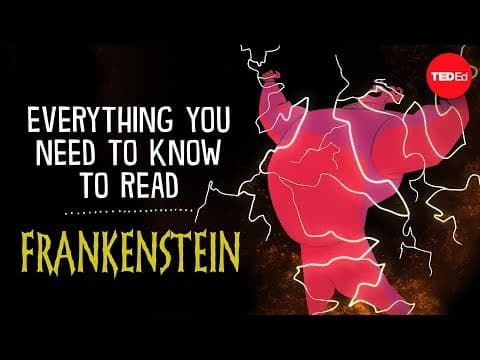
Popular depictions of Frankenstein often evoke an image of a green, groaning figure. However, this is not the monster as conceived by Mary Shelley. In her novel, "Frankenstein" refers to the nameless creature's maker, Dr. Victor Frankenstein. The tension between creator and creature is so profound that the two have merged in our collective imagination.
The narrative follows Dr. Frankenstein's futile quest to impart and sustain life. He constructs his monster piece by piece from dead matter and electrifies it into a conscious being. However, upon completing his experiment, he is horrified by the result and flees. Yet, time and space cannot banish the abandoned monster, leading to a chilling chase between the two.
Shelley subtitled her fireside ghost story "The Modern Prometheus," referencing the Greek myth of the Titan Prometheus, who stole fire from the gods and gave it to humanity. This act granted humanity knowledge and power, but for tampering with the natural order, Prometheus was punished by being chained to a rock and eaten by vultures for eternity. The myth enjoyed a resurgence during the Romantic Period, and Mary Shelley, as a prominent Romantic, shared the movement's appreciation for nature, emotion, and the purity of art.
Two years after the release of "Frankenstein," Percy Shelley reimagined Prometheus's plight in his lyrical drama, "Prometheus Unbound." The Romantics often used these mythical references to highlight the purity of the ancient world in contrast to modernity, typically regarding science with suspicion. "Frankenstein" serves as one of the first cautionary tales about artificial intelligence, where the terror is not supernatural but rather born in a laboratory.
The text is infused with gothic devices, characterized by unease, eerie settings, the grotesque, and the fear of oblivion. These elements are not merely stylistic; they are rooted in Mary Shelley's personal trauma. Born in 1797 to radical intellectual figures William Godwin and Mary Wollstonecraft, Mary was haunted by her mother's death during childbirth. This loss profoundly affected her, and she later faced her own struggles with childbirth. Following her elopement with Percy at 16, she became pregnant, but that baby died shortly after birth. Out of four more pregnancies, only one of their children survived.
Critics have linked these tragedies to the themes explored in "Frankenstein." Shelley depicts birth as both creative and destructive, with the monster serving as a disfigured mirror of the natural cycle of life. The creature embodies Dr. Frankenstein's corruption of nature in his quest for glory, representing his fatal flaw, or hamartia.
Dr. Frankenstein's god complex is most evident in his declaration: "Life and death appear to me ideal bounds which I should first break through and pour a torrent of light onto our dark world." Although he accomplishes something awe-inspiring, he plays with fire at his own ethical expense. This decision reverberates throughout the novel, which is rich with references to fire and imagery contrasting light and dark. These moments not only evoke the spark of Prometheus's fire but also highlight the power of radical ideas to expose the darker aspects of life.
Mary Shelley's "Frankenstein" is a multifaceted work that intertwines personal trauma with broader themes of creation, ethics, and the consequences of scientific advancement. As readers delve into this classic text, understanding its historical context, gothic elements, and the profound implications of its narrative can enrich their experience and appreciation of this timeless story.