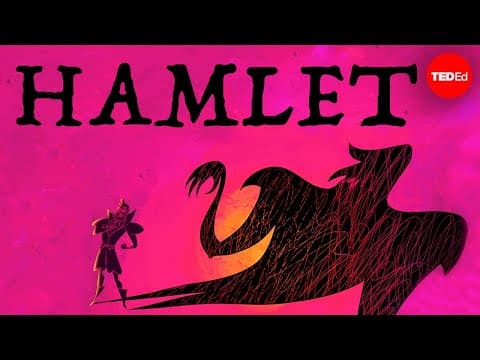
Shakespeare's Hamlet delves into themes of conspiracy, moral ambiguity, and the human condition through the story of a prince grappling with revenge, madness, and the consequences of his indecision.
"Who’s there?" This haunting question, whispered in the dark, sets the stage for a complex narrative filled with conspiracy, deception, and moral ambiguity. Written by William Shakespeare between 1599 and 1601, Hamlet presents a protagonist who is not only haunted by the past but also immobilized by the uncertainties of the future.
The play opens with the sudden death of Hamlet's father, which sends the young prince back home from school, feeling like a stranger in his own house. His return is marked by confusion and suspicion, particularly when he encounters a ghost that bears the likeness of his deceased father. This spectral figure reveals a shocking truth: he was murdered by Hamlet's uncle, Claudius, who has since usurped the throne and married Hamlet's mother, Queen Gertrude.
Driven by grief and rage, Hamlet embarks on a quest for revenge against Claudius. However, Hamlet diverges from traditional tragedies that often feature swift action or passionate romance. Instead, it delves deeply into Hamlet's indecisiveness and the tragic consequences that arise from it. The ghost's revelation thrusts Hamlet into a series of dilemmas: What actions should he take? Who can he trust? What role should he play in seeking justice?
The play is populated with a tangled web of characters, each with their own motives and agendas. Hamlet's interactions with friends, family, and love interests are fraught with tension and uncertainty. His constant delays and hesitations can be frustrating, yet they render him one of Shakespeare's most relatable characters. Rather than acting impulsively, Hamlet becomes ensnared in the complexities of thought and reflection, mirroring the internal struggles many of us face.
Shakespeare's use of introspective language enhances the play's exploration of existential themes. From Claudius's contemplations of morality to Hamlet's meditations on mortality, the melancholic monologues resonate deeply. One of the most famous passages, Hamlet's soliloquy, encapsulates his existential crisis:
"To be or not to be—that is the question: Whether ’tis nobler in the mind to suffer The slings and arrows of outrageous fortune, Or to take arms against a sea of troubles And, by opposing, end them."
This moment crystallizes Hamlet's internal conflict between thought and action, life and death. It raises further questions about the nature of his madness: Is it a strategic performance to mislead his enemies, or is he genuinely teetering on the brink of insanity?
Hamlet's introspection often blinds him to the chaos he creates around him. His treatment of Ophelia, his love interest, exemplifies this tragic oversight. Her descent into madness, exacerbated by Hamlet's erratic behavior, serves as a poignant reminder of the collateral damage caused by his indecision. The play illustrates how tragedy can stem from human error, whether through willful blindness or deliberate deceit.
Despite the chaos, one aspect of Hamlet remains clear: the humanity of its titular character. The audience is left to grapple with the question of who the "real" Hamlet is. Is he a noble son seeking vengeance for his father, or a troubled prince sowing discord in the court? Should he act decisively or remain an observer? The play invites us to ponder these questions, reflecting on our own uncertainties and the shadows that lurk in our lives.
Hamlet is a profound exploration of the human condition, marked by themes of revenge, madness, and the consequences of indecision. Shakespeare's masterful storytelling and rich character development invite readers to engage with the complexities of life, making Hamlet a timeless work that continues to resonate with audiences today. As we navigate our own uncertainties, we are reminded of the questions that linger in the dark: Who are we? Why are we here? And what awaits us in the shadows?