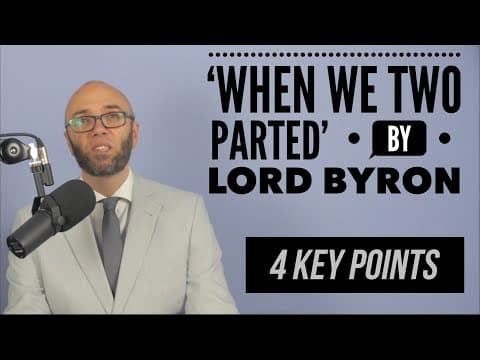
Lord Byron's poem 'When We Two Parted' delves into the profound pain of separation from a loved one, utilizing a disrupted sonnet structure, death-related imagery, and a cyclical format to convey the speaker's emotional turmoil and unending grief.
Lord Byron's poem "When We Two Parted" is a poignant exploration of the emotional turmoil that accompanies the separation from a loved one. This blog post will delve into four key aspects of the poem that highlight its themes of love, loss, and enduring grief.
The poem begins with a structure reminiscent of a Shakespearean sonnet, employing the rhyme scheme ABAB CDCD EFEF. This choice of form is significant as sonnets are traditionally associated with love and harmony. The initial adherence to this rhyme scheme suggests that the relationship being described was once filled with affection and positivity. However, this sense of harmony is soon disrupted, signaling a shift in the emotional landscape of the poem.
A critical turning point occurs when the poem deviates from the expected sonnet form. Instead of concluding with a GG rhyme, the poem shifts to a GH rhyme at the line "thy vows are all broken." This moment marks the speaker's overwhelming realization of separation and absence. The break in the rhyme pattern mirrors the speaker's emotional collapse, emphasizing the pain of betrayal and loss.
The poem's structure further illustrates the speaker's suffering. Initially, the use of accentual verse, where each line maintains a consistent number of stressed syllables, creates a sense of regularity. However, this pattern is disrupted in lines 5 and 7, coinciding with the speaker's realization that their lover no longer cares. This irregularity symbolizes the internal conflict and emotional instability experienced by the speaker, mirroring the shock of rejection and the chaos that follows.
Byron intensifies the speaker's suffering through the use of death-related imagery, suggesting that the end of the relationship feels akin to the death of love itself. The phrase "knell in mine ear" evokes the sound of a funeral bell, a powerful symbol of death. In this context, the speaker is not merely mourning the end of a romantic relationship; they are grieving the loss of something that once brought them joy and fulfillment. The metaphorical death of love transforms the speaker's experience into one of profound mourning, akin to attending a funeral.
The cyclical structure of the poem reinforces the inescapable nature of the speaker's grief. Rather than finding closure, the speaker is trapped in an endless loop of suffering. The repetition of the final line, "with silence and tears," echoes the poem's opening, highlighting the speaker's inability to escape their pain. This cyclical format reflects the deep impact of separation, leaving the speaker without hope and underscoring the poem's overarching message about the enduring suffering that follows the absence of a loved one.
In "When We Two Parted," Lord Byron masterfully captures the profound sorrow that accompanies the end of a relationship. Through the use of disrupted rhyme schemes, death-related imagery, and a cyclical structure, the poem conveys the speaker's emotional turmoil and the unending nature of their grief. Byron's exploration of love and loss resonates deeply, reminding readers of the complexities of human emotions and the lasting impact of separation.