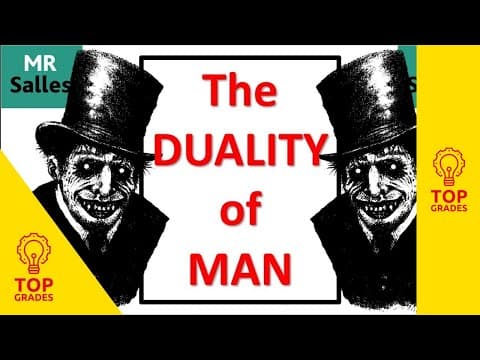
This blog post delves into the symbolism of Dr. Jekyll's house in Robert Louis Stevenson's 'Jekyll and Hyde,' illustrating how it represents the duality of man, the conflict between societal respectability and hidden desires, and the broader implications of science and morality in Victorian society.
In Robert Louis Stevenson’s novella, "Strange Case of Dr Jekyll and Mr Hyde," the theme of duality is central to understanding the characters and their motivations. One of the most significant symbols in the story is Dr. Jekyll's house, which serves as a metaphor for the duality of man. This blog post will explore how Jekyll's house reflects the conflict between societal expectations and hidden desires, as well as the implications of science and morality in Victorian society.
To appreciate the significance of Jekyll's house, it is essential to understand its historical context. In the early 20th century, Leicester Square was a grand area, albeit beginning to show signs of commercialization. Jekyll's house, which still stands today, was once associated with Dr. John Hunter, a celebrated surgeon known for his controversial practices involving body-snatching. This connection to Hunter adds layers of meaning to Jekyll's character, as it embodies the tension between respectability and the darker aspects of scientific inquiry.
Jekyll's house is described as a symbol of wealth and comfort, presenting a facade of respectability. However, this facade hides the darker truths within, much like Jekyll himself. The house's exterior represents Jekyll's public persona, while the hidden activities within symbolize the repressed desires and moral conflicts he faces. Stevenson uses the house to illustrate the dangers of a life lived behind a mask, where societal expectations suppress true identity.
Stevenson intricately weaves the theme of duality into the description of Jekyll's house. The contrast between the front and back of the house mirrors the duality of Jekyll and Hyde. The front, with its grandeur, represents Jekyll's respectable life, while the back, associated with illegal activities, symbolizes Hyde's existence. This duality is further emphasized through the physical descriptions of both characters' residences.
Jekyll's house is depicted as having a great air of wealth, yet it is also described as being plunged in darkness. This darkness serves as a metaphor for Jekyll's moral decay and the hidden aspects of his personality. The dusty windows and barred doors signify his desire to keep the outside world at bay, reflecting his internal struggle with his identity.
In contrast, Hyde's house, located in Soho, is furnished with luxury and good taste, challenging the notion that it belongs to a criminal. This description suggests that Hyde, too, has refined tastes, blurring the lines between good and evil. Stevenson implies that beneath the surface, Hyde represents desires that are not inherently evil but are simply part of human nature.
The physical descriptions of both houses serve as symbols of hidden identity. Jekyll's house, once a place of learning and discovery, has become a site of shame and secrecy. The theater where Jekyll's students once gathered is now silent, reflecting his internal conflict and the consequences of his experiments. The imagery of fog and darkness further emphasizes the obscured truth of Jekyll's character.
Stevenson uses the houses to comment on the relationship between science and morality. Jekyll's experiments with the transformative drug symbolize the potential dangers of scientific exploration when divorced from ethical considerations. The drug does not create Hyde; it merely unlocks the darker aspects of Jekyll's personality, suggesting that the potential for evil exists within everyone.
In conclusion, Jekyll's house serves as a powerful metaphor for the duality of man in Stevenson's "Jekyll and Hyde." Through the contrasting descriptions of Jekyll's and Hyde's residences, Stevenson explores themes of respectability, hidden desires, and the moral implications of scientific inquiry. The novella ultimately challenges readers to reflect on their own dualities and the societal pressures that shape their identities. By embracing the complexities of human nature, Stevenson advocates for a more nuanced understanding of morality and self-acceptance.