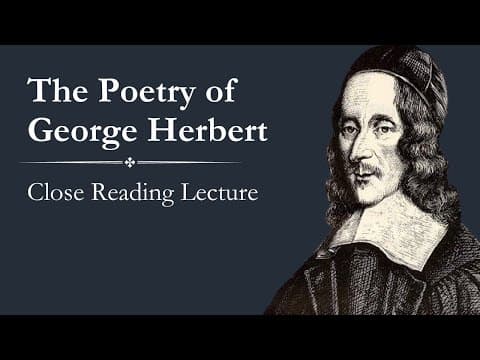
George Herbert's poetry is characterized by its complex yet homely style, intricate lyrical architecture, surprising endings, and a sweetness that resonates deeply with readers. This blog post delves into four key aspects of Herbert's work, showcasing how his background as a priest and rhetorician informs his unique approach to devotional poetry.
George Herbert's poetry has often been described as a complex plane style, a term that may seem contradictory at first. However, the more one reads Herbert, the more this description rings true. His poetry is homely yet profound, spontaneous yet meticulously crafted. In this blog post, we will explore four endearing aspects of George Herbert's style that make his work resonate with readers.
One of the most striking features of Herbert's poetry is its lyrical architecture. A prime example is found in his poem "The Altar," which serves as the first lyric poem in his collection, The Temple. The poem visually resembles an altar, and its structure is unique among the 127 stanzas in the collection. Herbert employs enjambment and varying metrical patterns to create a sense of movement and emotional depth.
The poem begins with a broken altar, symbolizing a heart that is both physically and spiritually fragmented. Herbert draws on biblical imagery, referencing the unhewn altar commanded by God in Exodus 20 and the broken heart in Psalm 51. The poem's structure reflects its content, with broken lines mirroring the brokenness of the heart. This intricate interplay between form and meaning is a hallmark of Herbert's style.
Herbert's poem "A Wreath" showcases his internal schematic architecture, often overlooked due to its seemingly simple appearance. The poem employs chiasmus, a rhetorical scheme that creates a mirror image of words, enhancing its lyrical quality. The repetition of phrases and the careful arrangement of language create a sense of unity and circularity, much like a wreath.
The poem's themes of praise and simplicity are interwoven, culminating in a profound reflection on the relationship between the speaker and God. Herbert's mastery of rhetorical devices, learned during his time as a rhetorician, informs his poetic craft, allowing him to convey complex spiritual ideas through accessible language.
Herbert's use of figurative language is another endearing aspect of his poetry. He employs metaphors, similes, and conceits drawn from everyday life, creating a rich tapestry of imagery. In his poem "The Flower," Herbert compares the soul to a flower, using springtime imagery to convey themes of renewal and divine grace.
The poem's language is both tender and vivid, illustrating the speaker's emotional journey from despair to hope. Herbert's ability to evoke complex feelings through simple, relatable imagery is a testament to his skill as a poet. His metaphors often carry a dual meaning, blending the literal and the metaphorical in a way that deepens the reader's understanding of the text.
Many of Herbert's poems feature surprise endings that recontextualize the speaker's relationship with God. In his parabolic poem about a tenant seeking a new lease from a rich Lord, the speaker's journey leads to unexpected revelations about grace and redemption. The twist at the end not only surprises the reader but also highlights the theological shift from the Old Covenant to the New Covenant.
This element of surprise is a powerful tool in Herbert's poetry, allowing him to challenge the reader's expectations and provoke deeper contemplation on spiritual matters. The abrupt shifts in tone and perspective often serve to reinforce the themes of grace and divine love that permeate his work.
Finally, Herbert's poetry is imbued with a sense of devotional sweetness. His use of the word "sweet" recurs throughout The Temple, reflecting the warmth and intimacy of his relationship with God. In the poem "Love (III)," Herbert personifies love as a welcoming figure, inviting the soul to partake in divine grace despite feelings of unworthiness.
This interplay of hospitality and humility creates a rich emotional landscape, allowing readers to connect with the speaker's journey toward acceptance and reconciliation. Herbert's ability to convey profound theological concepts through simple, heartfelt language is what makes his poetry enduringly appealing.
George Herbert's poetry is characterized by its lyrical architecture, intricate internal structures, vivid figurative language, surprising endings, and a sweetness that resonates deeply with readers. These qualities not only reflect his background as a priest and rhetorician but also contribute to the timeless appeal of his work. Herbert's ability to explore complex spiritual themes through accessible language ensures that his poetry continues to touch the hearts of both Christian and secular readers alike.