Franz Kafka's life and works embody the concept of the Kafkaesque, characterized by absurdity, bureaucratic struggles, and existential anxiety. His experiences shaped his writing, which reflects the human condition and the struggle against incomprehensible systems. Despite his personal disappointments, Kafka's legacy endures, offering profound insights into the shared human experience.
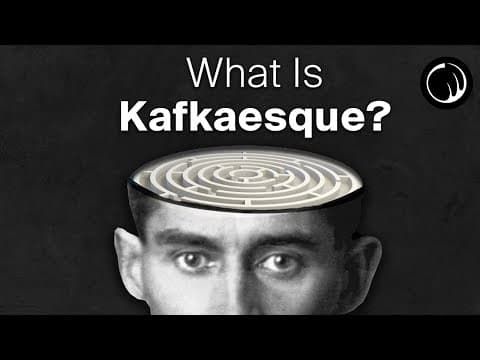
Franz Kafka is regarded as one of the greatest literary figures in recent history, known for his uniquely dark, disorienting, and surreal writing style. This style has led to the term "Kafkaesque," which describes situations that are absurdly complex and illogical, often reflecting the struggles of individuals against incomprehensible systems. To fully appreciate Kafka's work, it is essential to understand his early life and the experiences that shaped his writing.
Kafka was born in Prague in 1883 to Hermann and Julie Kafka. His father, Hermann, was a successful businessman who rose from humble beginnings to become a member of the higher middle class. He had high expectations for his son, hoping Franz would measure up to his ideals. However, Franz was a small, anxious, and sickly child, which led to a strained relationship with his father. This disappointment manifested in psychological abuse, as Hermann attempted to mold Franz into the person he wished he could be.
As a means of coping with his anxiety, guilt, and self-hatred, Kafka developed a passion for writing during his adolescence. However, his father did not support this pursuit, forcing Kafka to study law instead. While in college, he met Max Brod, one of his few close friends, who would later encourage him to publish his work.
After completing his law degree, Kafka worked in a law office and later for an insurance company. His experiences in these bureaucratic environments, characterized by long hours, unpaid overtime, and overwhelming paperwork, contributed to his misery. Despite this, Kafka continued to write, producing some of his most notable works, including "The Trial," "The Castle," and "America."
Unfortunately, Kafka's writings went largely unnoticed during his lifetime. He believed his work was unworthy and left many pieces unfinished. On his deathbed in 1924, he instructed Brod to burn all his unpublished manuscripts. However, Brod defied these wishes and spent the following year organizing and publishing Kafka's notes, leading to his posthumous recognition as a literary giant.
The term Kafkaesque typically refers to the bureaucratic nature of capitalist, judicial, and governmental systems, where individuals find themselves trapped in complex, unclear processes. However, Kafka's work extends beyond mere descriptions of these systems; it delves into the reactions of individuals subjected to them.
In "The Trial," the protagonist Joseph K. is arrested without explanation and forced through an absurd trial filled with corruption and disorder. Despite his efforts to understand his situation, he remains guilty without ever knowing the reason for his arrest. Similarly, in "Metamorphosis," Gregor Samsa awakens to find himself transformed into an insect, facing the absurdity of his new existence while struggling to fulfill his familial obligations.
Both stories illustrate the confrontation with the absurd, where characters grapple with senseless circumstances that they cannot control or comprehend. Kafka's protagonists embody the human condition's unyielding desire for answers amidst existential anxiety, guilt, and suffering.
Kafka's characters often persist in their struggles against absurdity, attempting to reason and understand their situations, even when success seems impossible. This reflects a broader commentary on the human experience: the desire to find meaning and control in a world that often defies understanding.
One interpretation of Kafka's work suggests that the struggle for understanding is both inescapable and futile. As conscious beings, we fight against the absurdity of existence, yet in doing so, we may perpetuate our struggles. Kafka's narratives encourage readers to confront the darker aspects of self and existence, revealing the complexities of human experience.
Kafka's influence on literature, philosophy, and humanity is undeniable. His works resonate with readers who have experienced feelings of isolation and absurdity in their own lives. Kafka's story is not unique; many individuals face familial pressures, societal expectations, and existential dilemmas that leave them feeling disconnected from their true selves.
Kafka's greatness lies not in describing something profoundly unique but in articulating the mundanely common experiences of life in a profound way. His works encapsulate the often indescribable feelings of anxiety and absurdity that touch us all.
As writer Anne Rice noted, Kafka's works do not offer false hope but rather confront the darker aspects of existence. Kafka's legacy serves as a reminder that despite the absurdities of life, we continue to strive for understanding and connection. His writings encourage us to embrace our struggles and seek honesty in our experiences, no matter how challenging they may be.