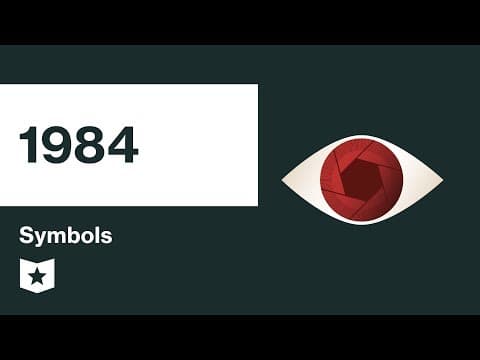
George Orwell's 1984 is rich with symbols that illustrate the themes of totalitarianism, surveillance, and the manipulation of truth. Key symbols include Emmanuel Goldstein, the telescreen, Newspeak, the memory hole, Big Brother, the false equation, the glass paperweight, and the boot stamping on a human face, each representing different aspects of the oppressive regime and the struggle for individual thought and freedom.
George Orwell's dystopian novel, 1984, is renowned for its profound commentary on totalitarianism and the mechanisms of control. Central to this narrative are various symbols that encapsulate the themes of oppression, surveillance, and the manipulation of truth. This blog post delves into the key symbols in 1984, exploring their meanings and implications within the context of the story.
One of the most significant symbols in 1984 is Emmanuel Goldstein. Interestingly, Goldstein may not even exist, serving as a representation of the power of groupthink. The Party requires a scapegoat to maintain its superiority, and Goldstein embodies everything that opposes the Party. He is both an object of hatred and a symbol of hope for the citizens, illustrating how the Party manipulates public perception to control the populace.
The telescreen is another crucial symbol, representing the Party's omnipresent surveillance and total power over its citizens. These devices transmit information both ways, allowing the Party to watch its citizens while simultaneously broadcasting propaganda. The constant presence of telescreens signifies the extent of control the Party exerts, ensuring that individuals are always aware they are being monitored.
Newspeak is a vital symbol that reflects the Party's effort to control thought through language. By continually revising and editing the English language, the Party aims to keep the populace ignorant of the past, thereby hindering their ability to learn and think critically. As Newspeak evolves, the original language, referred to as Oldspeak, is gradually erased.
The memory hole complements this concept, serving as an incinerator for documents and photographs that contradict the Party's narrative. This symbol illustrates the Party's manipulation of history and truth, as it eliminates any evidence of the past that could challenge its authority. Without the words to express their thoughts, individuals become incapable of articulating dissent.
Big Brother is perhaps the most iconic symbol in 1984. His enormous face appears on telescreens and posters, serving as a constant reminder of the Party's surveillance. While citizens are told that "Big Brother is watching you" is meant to be comforting, it instead evokes a sense of terror. Big Brother embodies the Party's control and the pervasive fear that permeates society.
The false equation, 2 + 2 = 5, symbolizes the lies that the Party presents as truth. Acceptance of this equation signifies the Party's power to dictate reality, demonstrating how individuals can be coerced into believing falsehoods. This symbol also represents Winston's defeat at the novel's conclusion, where he ultimately succumbs to the Party's manipulation and accepts lies as truth.
The glass paperweight symbolizes beauty and the remnants of Winston's past. It represents his desire for a connection to a world that once was, as well as the love he shares with Julia. However, when the Thought Police shatter the paperweight, it signifies the destruction of their hopes and relationship, marking a pivotal moment in the narrative.
Winston and Julia's rented room serves as a temporary refuge, symbolizing their fleeting sense of security and hope for freedom. The sound of the singing woman outside evokes a sense of relative freedom for Winston, contrasting sharply with the oppressive reality of their lives.
Finally, the boot stamping on a human face is a powerful symbol of the Party's control and oppression. O'Brien's chilling assertion that the future looks like a boot stamping on a human face forever encapsulates the Party's relentless domination and the crushing of human emotion and freedom. This symbol starkly illustrates the bleakness of life under totalitarian rule.
The symbols in George Orwell's 1984 serve as critical tools for understanding the novel's themes of totalitarianism, surveillance, and the manipulation of truth. Each symbol, from Emmanuel Goldstein to the boot stamping on a human face, contributes to a deeper comprehension of the oppressive regime and the struggle for individual thought and freedom. Through these symbols, Orwell crafts a chilling portrayal of a society stripped of its humanity, urging readers to reflect on the importance of truth and the dangers of unchecked power.