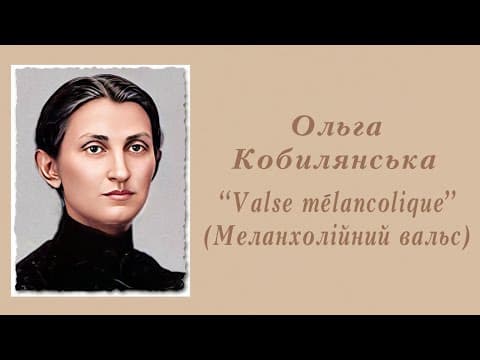
This blog post delves into the themes and characters of Olga Kobylianska's 'Melancholic Waltz', exploring the emotional depth of the narrative, the relationships between the characters, and the overarching influence of art and music on their lives.
Olga Kobylianska's work, particularly her piece titled "Melancholic Waltz", captures the essence of emotional turmoil and the intricate relationships between its characters. The narrative unfolds through a rich tapestry of dialogue and introspection, revealing the struggles of artists in their pursuit of beauty and harmony amidst the chaos of life.
The story begins with a profound reflection on the impact of melancholic music. The narrator expresses a deep connection to music that evokes feelings of sadness, describing how it flows like a stream of sorrow, leading to a state of emotional disintegration. This connection to music serves as a backdrop for the characters' experiences, illustrating how art can both uplift and burden the soul.
The narrative introduces three main characters, each embodying different aspects of artistic life. The narrator, a painter, shares a living space with two friends: a fellow artist and a musician. Their interactions reveal the complexities of their relationships, marked by admiration, jealousy, and the struggle for artistic recognition. The painter aspires to travel to Italy to immerse herself in the world of art, while her friends grapple with their own artistic ambitions and insecurities.
The painter, who is nearly a finished artist, is depicted as someone who takes her craft seriously. She dreams of selling her work and finding her path in the art world. Her dedication is contrasted with the more carefree attitude of her friends, highlighting the tension between ambition and artistic freedom.
The musician, who is deeply passionate about her art, seeks harmony not only in her music but also in her relationships. She believes that if everyone were educated and cultured, the world would be a better place. This idealism clashes with the practical realities of their lives, creating a rift between her and the painter, who feels constrained by societal expectations.
As the story progresses, the characters discuss the possibility of living together as unmarried women, challenging societal norms. They contemplate the idea of inviting a third companion into their lives, someone who could share in their artistic pursuits and alleviate their loneliness. This discussion reflects the broader themes of female independence and the search for companionship in a world that often marginalizes women.
The introduction of Sofia Dorochenko, a mysterious and talented musician, adds a new dynamic to the trio. Her arrival is marked by intrigue and curiosity, as the characters speculate about her background and artistic abilities. Sofia's presence brings both excitement and tension, as the painter and her friend navigate their feelings of admiration and rivalry.
The narrative reaches an emotional climax as Sofia's struggles with her own artistic identity and personal demons come to the forefront. Her passion for music is juxtaposed with her vulnerability, revealing the toll that artistic ambition can take on an individual. The painter's admiration for Sofia transforms into a deeper understanding of the sacrifices that come with being an artist.
Tragedy strikes when Sofia's mother passes away, leading to a profound shift in her character. The loss deeply affects her, and her music becomes a reflection of her grief. The painter and her friend witness this transformation, feeling both helpless and compelled to support Sofia in her darkest moments. The narrative poignantly illustrates how art can serve as both a refuge and a source of pain.
In "Melancholic Waltz", Kobylianska masterfully explores the interplay between art, emotion, and human connection. The characters' journeys highlight the complexities of artistic life, the pursuit of beauty, and the inevitable sorrows that accompany it. Through the lens of music and painting, the narrative invites readers to reflect on their own experiences with creativity and the profound impact it has on the human spirit.
Ultimately, Kobylianska's work serves as a reminder of the delicate balance between joy and sorrow in the life of an artist, encapsulated beautifully in the metaphor of the melancholic waltz.