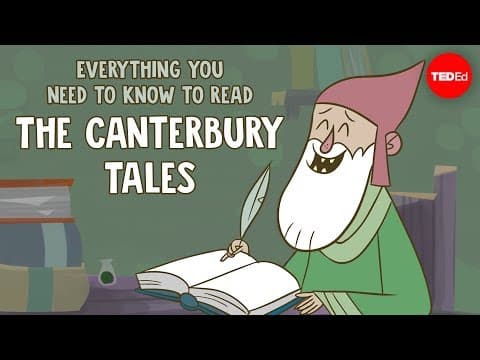
This blog post delves into Geoffrey Chaucer's 'The Canterbury Tales', highlighting its characters, themes, and the significance of its narrative structure, while also examining its historical context and enduring appeal.
Geoffrey Chaucer's 'The Canterbury Tales' is a cornerstone of English literature, renowned for its vibrant characters and intricate storytelling. This collection of tales, narrated by a diverse group of pilgrims, offers a unique glimpse into medieval society, blending humor, satire, and profound insights into human nature.
The journey begins with the tale of a portly Miller, who, despite being barely sober, recounts a raucous story involving a flighty wife of a crotchety old carpenter and her scholar lover. Their escapades include feigning madness, staging a biblical flood, and even public exposure. The narrative takes a humorous turn when the parish clerk, also enamored with the wife, attempts to woo her, leading to a series of comical and risqué events. This tale exemplifies Chaucer's ability to intertwine the lofty with the lowly, setting the tone for the rest of the collection.
'The Canterbury Tales' consists of 24 stories, each narrated by one of Chaucer's colorful characters. The cast includes familiar medieval figures such as a Knight, a Clerk, and a Nun, alongside less recognizable characters like a Reeve and a Manciple. The tales are written in Middle English, a language that evolved from Old English due to increased contact with European languages following the Norman Conquest of 1066. This linguistic shift is evident in the text, which features archaic symbols and a distinct vocabulary.
The characters first gather at the Tabard Inn in Southwark, united by their pilgrimage to Canterbury to visit the shrine of St. Thomas Becket, a martyred archbishop. The innkeeper proposes a storytelling competition, promising a feast for the best tale. This setup not only serves as a narrative device but also reflects the social dynamics of medieval society, where the feudal system often kept different classes apart.
Chaucer's background as a government official during the Hundred Years' War, along with his travels through Italy and France, informs the panoramic vision of his work. In 'The Canterbury Tales', no social class is spared from mockery. Chaucer employs the unique quirks of each character's language—ranging from the ribald humor of the Cook to the solemn prose of the Parson—to satirize their worldviews. This variety in dialects and genres provides a vivid record of medieval entertainment.
The tales encompass a wide range of themes and styles. The Knight's tale, for instance, explores courtly love and chivalry, while the stories from working-class narrators often delve into comedy, featuring scatological language and slapstick humor. This diversity ensures that there is something for every reader, contributing to the enduring popularity of the work in both its original Middle English and in translation.
Despite its extensive narrative, 'The Canterbury Tales' is considered unfinished. The prologue introduces 29 pilgrims, each promised four stories, yet the innkeeper never declares a winner of the storytelling contest. This open-ended conclusion invites readers to engage with the text actively, allowing them to judge the tales and their narrators for themselves. Chaucer's reluctance to choose a victor may stem from his fondness for each character or his immersion in the creative process.
'The Canterbury Tales' remains a vital part of literary history, celebrated for its rich characterizations and insightful commentary on medieval life. Chaucer's ability to blend humor with serious themes ensures that readers continue to find relevance and enjoyment in these tales, making it a timeless work that resonates across generations.