Exploring the Spiritual Depths of George Herbert and Richard Crashaw: A Journey Through 17th Century Metaphysical Poetry
This blog post delves into the works of 17th century poets George Herbert and Richard Crashaw, highlighting their unique spiritual perspectives and poetic styles, particularly in the context of their religious backgrounds and the metaphysical poetry movement.
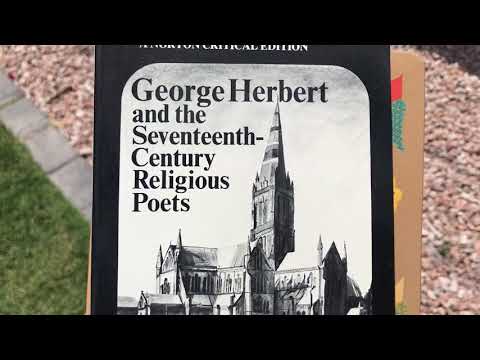
In this exploration of 17th century poetry, we focus on two significant figures: George Herbert and Richard Crashaw. Both poets are often associated with the metaphysical school, alongside John Donne, yet they possess distinct sensibilities that reflect their individual religious backgrounds and poetic styles. As we approach Easter, it is fitting to examine their works, which delve into profound spiritual themes.
George Herbert: The Spiritual Poet
George Herbert, an Anglican priest, is renowned for his deeply spiritual poetry. His works often reflect a quest for divine connection and understanding. One of his notable poems is "Easter," which captures the essence of resurrection and renewal. The poem begins:
"The Sun arising in the east though he give light and the East perfume if they should offer to contest with I arising they presume can there be any day but this though many sons to shine endeavor we count three hundred but we miss there is but one and that one ever."
In this excerpt, Herbert employs a telescopic approach, zooming in on the significance of Easter as a singular, transformative day. His use of rhyme and rhythm enhances the spiritual message, emphasizing the uniqueness of Christ's resurrection.
Another poem by Herbert, titled "The Passage from Grace," further illustrates his contemplative nature:
"The dude at every morning fall and shall the do outstrip tide of the do for which dress cannot call drop from above or in employment to man is no star but a quick call of mortal fire who blows it not nor doth control a faint desire lets his own ashes choke his soul."
Here, Herbert reflects on human endeavors and the greater purpose behind them. His poetry often reveals a sense of divine design, suggesting that while human actions are significant, they are part of a larger spiritual narrative.
Richard Crashaw: The Catholic Poet
In contrast to Herbert, Richard Crashaw was originally an Anglican who converted to Catholicism. This shift in faith influenced his poetic voice, offering a different perspective within the metaphysical tradition. One of his most famous poems, "The Weeper," resonates with themes of sorrow and beauty:
"Heavens thy fair eyes be heavens bosom drinks thy gentle stream tis seed times still with thee and stars thou dost whose harvest dares promise to earth to counter share counter shine whatever makes heavens forehead fine."
Crashaw's work is characterized by a rich interplay of imagery and emotion. He explores the tension between earthly existence and heavenly aspirations, often employing intricate rhyme schemes and varied meter to convey his thoughts. His lines evoke a sense of longing and reflection, as seen in the continuation of "The Weeper":