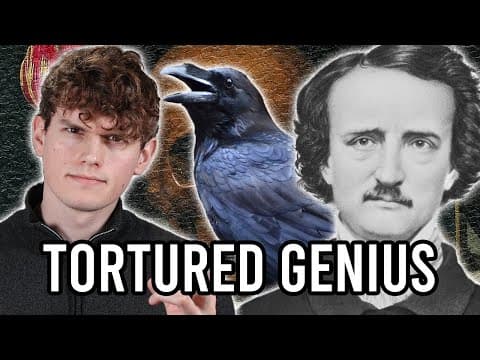
This blog post delves into the profound themes of guilt, grief, and the human psyche as explored in Edgar Allan Poe's short stories, particularly 'The Telltale Heart,' 'The Raven,' and 'The Black Cat.' It examines the philosophical implications of sanity, the nature of grief, and the thrill of transgression, ultimately questioning the rationality of human beings and the forces that drive our actions.
Edgar Allan Poe's works are a deep dive into the recesses of the human mind, exploring themes of guilt, madness, grief, and the darker aspects of human nature. This blog post will examine three of his most notable stories: "The Telltale Heart," "The Raven," and "The Black Cat." Each story offers unique insights into what it means to be human, the existential pain of loss, and the thrill of transgression.
In "The Telltale Heart," we meet a protagonist who insists he is not mad, despite having committed murder. This story raises profound questions about sanity and the nature of guilt. The narrator meticulously plans the murder of an old man, driven by an irrational hatred of the man's eye. After hiding the body beneath the floorboards, he is confronted by the police, who come to investigate a reported shriek.
As the story unfolds, the narrator becomes increasingly tormented by the imagined beating of the old man's heart, which symbolizes his overwhelming guilt. This auditory hallucination leads him to confess his crime, revealing the body to the police. The tension between his perceived sanity and the reality of his actions invites readers to ponder the nature of madness. Are we truly in control of our minds, or do our suppressed emotions betray us?
Philosopher Michel Foucault discusses how society labels individuals as mad, effectively ostracizing them from moral responsibility. The narrator's panic about his sanity reflects a deeper fear of losing his humanity. This theme resonates with readers, as it challenges us to consider our own moral boundaries and the nature of our sanity.
Poe's poem "The Raven" serves as a poignant exploration of grief and the human experience of loss. The unnamed narrator mourns his lost love, Lenore, and attempts to distract himself with knowledge. However, his sorrow is interrupted by the arrival of a raven, which becomes a symbol of his despair.
The raven's repeated refrain of "nevermore" serves as a haunting reminder of the permanence of loss. The narrator's descent into madness mirrors the struggle many face when dealing with grief. He oscillates between anger, sorrow, and despair, ultimately confronting the painful truth that Lenore is gone.
This poem raises philosophical questions about the nature of truth and the human capacity to deceive ourselves. Is it better to confront painful realities, or is there value in the comforting illusions we create? The raven's presence illustrates the enduring nature of grief, suggesting that while we may learn to live with our losses, the scars they leave behind remain.
In "The Black Cat," Poe delves into the darker impulses of human nature, exploring the thrill of transgression. The story follows a man who, despite his initial kindness, succumbs to alcoholism and violence. His descent into cruelty culminates in the murder of his beloved cat, Pluto, and the subsequent hanging of its body as a grotesque display of his depravity.
The protagonist's actions are driven by a desire to transgress boundaries for their own sake, reflecting a disturbing aspect of human psychology. This theme resonates with the writings of the Marquis de Sade, who argued for the abolition of morality itself. The thrill of breaking rules becomes a central focus, leading to self-destructive behavior.
Poe's narrative illustrates how the urge to transgress can manifest in various forms, ultimately leading to poetic justice. The protagonist's actions come back to haunt him, as the consequences of his cruelty are revealed in a horrifying twist. This story prompts readers to consider the nature of cruelty and the darker impulses that lie within us all.
Across these three stories, Poe grapples with the philosophical question of human rationality. The Enlightenment ideal of man as a rational being is challenged by the irrational forces that drive our actions. David Hume's assertion that reason is the slave of the passions suggests that our emotions often dictate our behavior, leading us to act against our better judgment.
Poe's characters exemplify this struggle, as they are propelled by guilt, grief, and the thrill of transgression. The tension between rationality and irrationality raises important questions about the nature of humanity. Are we fundamentally rational beings, or are we at the mercy of our darker impulses?
Edgar Allan Poe's exploration of the human psyche reveals the complexities of guilt, grief, and the thrill of transgression. His stories challenge us to confront the darker aspects of our nature and question the very foundations of our understanding of sanity and morality. As we navigate the intricacies of being human, Poe's work serves as a haunting reminder of the forces that shape our actions and the existential struggles we all face.