The blog post delves into the themes of secularism, identity, and the socio-political landscape of post-independence India as depicted in MHD-03's novel 'सूखा बरगद'. It discusses the impact of partition on Muslim families, the dynamics within a middle-class family, and the contrasting beliefs of the parents, all while highlighting the importance of human relationships over religious identities.
In this blog post, we will discuss the significant themes presented in the renowned Hindi novel 'सूखा बरगद' by MHD-03, first published in 1969. The novel is set against the backdrop of India's partition and independence, focusing on the lives of Muslim families in India post-1947.
The narrative begins with the historical context of India's independence from British rule in 1947, which not only marked the end of colonialism but also led to the partition of the country based on religious lines. This division resulted in the creation of Pakistan, leading to a significant migration of populations based on their religious identities. Despite this division, a large Muslim community remained in India, which is a crucial aspect of the novel's setting.
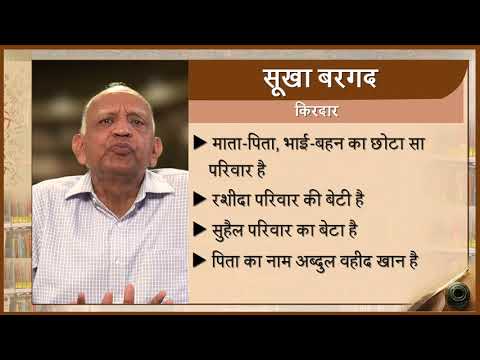
The story unfolds in Bhopal, the capital of Madhya Pradesh, and revolves around a middle-class family. The family consists of the parents, referred to as Abbu (father) and Ammi (mother), and their two children, a son and a daughter. The protagonist, Raseeda, navigates her life amidst the socio-political challenges that arise from the partition.
The family dynamics are central to the narrative, showcasing the contrasting beliefs of the parents. Abbu is portrayed as a progressive Muslim who does not strictly adhere to religious practices, while Ammi is depicted as a devout woman who follows religious customs, including wearing a burqa. This dichotomy highlights the broader theme of secularism versus religious orthodoxy in Indian society.
The novel emphasizes the importance of secularism in India, where individuals of different religions coexist. It illustrates how the Indian Constitution provides equal rights to all citizens, regardless of their religion, contrasting sharply with Pakistan's identity as an Islamic nation. The characters' interactions reflect the complexities of maintaining personal beliefs while navigating societal expectations.
Education plays a pivotal role in the lives of Raseeda and her brother. Their father encourages them to pursue modern education, while their mother wishes for them to receive religious education. This conflict represents the struggle between traditional values and modernity, a recurring theme in the novel.
The narrative also delves into the socio-political landscape of post-independence India, addressing issues such as economic challenges, political ideologies, and communal tensions. The characters' experiences reflect the broader societal changes and the impact of political movements on individual lives.
As the story progresses, the influence of politics becomes evident, particularly through the character of Suhail, who becomes embroiled in communal politics. This shift illustrates how political ideologies can affect personal relationships and community dynamics, leading to a sense of division among people who once coexisted peacefully.
In conclusion, 'सूखा बरगद' serves as a poignant exploration of the themes of secularism, identity, and the socio-political challenges faced by Muslim families in post-independence India. Through the lens of a middle-class family, MHD-03 presents a nuanced portrayal of the complexities of human relationships that transcend religious identities. The novel invites readers to reflect on the importance of understanding and empathy in a diverse society, emphasizing that humanity should prevail over religious divisions.