The blog post delves into the central themes of U.R. Ananthamurthy's novel 'Samskara', focusing on the critique of the caste system, the conflict between tradition and modernity, and the exploration of identity and morality within Hindu society.
In this blog post, we will explore the profound themes presented in the novel 'Samskara', written by U.R. Ananthamurthy. As the examination of this literary work becomes increasingly relevant, especially with upcoming examinations, it is essential to understand its core ideas and messages.
'Samskara' is a significant work that critiques the rigid caste system prevalent in Hindu society. The narrative revolves around the life of Narayanappa, a Brahmin who defies traditional norms, and the ensuing conflict that arises from his actions. The novel serves as a reflection of the societal values and the struggles between orthodoxy and modernity.
One of the most prominent themes in 'Samskara' is the critique of the caste system. Ananthamurthy highlights the oppressive nature of Brahminical culture, showcasing how it dictates the lives of individuals based on their caste. The novel illustrates the absurdity of rituals and the extreme adherence to tradition, even in death. For instance, the ritualistic burning of a dead body is emphasized, revealing the deep-rooted beliefs that prioritize caste over humanity.
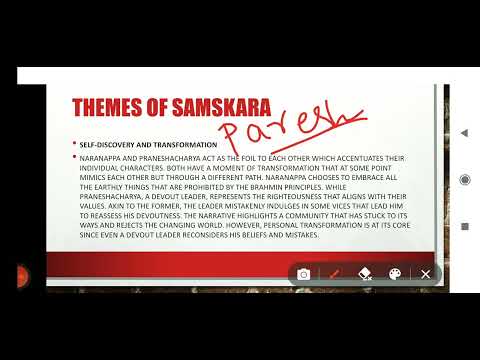
The theme of identity is intricately woven into the narrative. The protagonist, Narayanappa, grapples with his identity as a Brahmin while simultaneously rejecting the oppressive customs associated with it. His actions challenge the societal norms, leading to a conflict between his personal beliefs and the expectations of his community. This struggle is further complicated by his relationships, particularly with characters like Paramesh Acharya, who embody the traditional values that Narayanappa seeks to escape.
The battle between dharma (righteousness) and adharma (unrighteousness) is a recurring theme in 'Samskara'. The novel portrays how characters navigate their moral dilemmas in a society that often prioritizes tradition over ethical considerations. Narayanappa's defiance of Brahminical norms raises questions about the nature of morality and the consequences of challenging societal expectations.
Greed emerges as another critical theme, particularly in the context of the community's reaction to Narayanappa's death. The desperation of the Brahmins to perform the last rites for monetary gain underscores the corrupting influence of greed. This theme serves as a commentary on how material desires can overshadow moral obligations, leading to a breakdown of community values.
The novel also explores the potential for transformation and redemption. Characters like Paramesh Acharya undergo significant changes as they confront their beliefs and the realities of their society. The narrative suggests that understanding and compassion can lead to personal growth, even in a rigidly structured environment.
In conclusion, U.R. Ananthamurthy's 'Samskara' is a rich tapestry of themes that challenge the reader to reflect on the complexities of identity, morality, and societal norms. Through its critique of the caste system and exploration of human nature, the novel remains a powerful commentary on the struggles between tradition and modernity. As we delve deeper into its themes, we gain valuable insights into the human condition and the societal constructs that shape our lives.