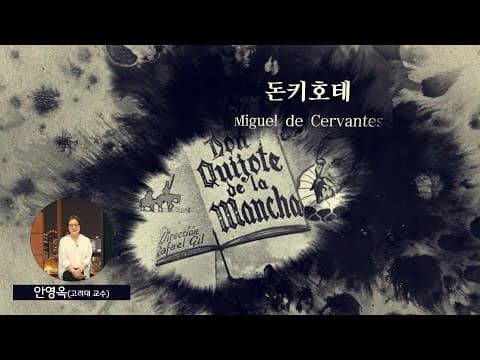
This blog post delves into the significance of Miguel de Cervantes' 'Don Quixote', exploring its historical context, the life of Cervantes, and the profound themes of idealism, reality, and human nature that resonate through the novel.
In this post, we will explore the literary masterpiece "Don Quixote" by Miguel de Cervantes, which has been hailed as one of the greatest works of literature in history. In 2002, the Norwegian Book Club asked 54 prominent figures from 54 countries to recommend the greatest literary work of all time, and "Don Quixote" was chosen as the top contender. This recognition speaks volumes about the novel's enduring impact and relevance.
To understand the significance of "Don Quixote", we must first consider the historical context in which Cervantes wrote. Cervantes lived during the 16th and early 17th centuries, a time marked by the rise and fall of the Spanish Empire under rulers like Charles I and Philip II. This era was characterized by extreme political and religious turmoil, including the Inquisition and the suppression of individual freedoms.
Cervantes himself experienced the harsh realities of this period. He served in the Spanish navy, was captured by pirates, and spent five years as a slave in Algiers. After his release, he struggled with poverty and obscurity, which deeply influenced his writing.
Cervantes was born in Alcalá de Henares, Spain, and his early life was marked by instability. He pursued a military career and fought bravely in the Battle of Lepanto, where he was severely injured. After his military service, he faced numerous hardships, including imprisonment due to financial troubles.
Despite these challenges, Cervantes was a prolific writer. He published his first pastoral novel, "La Galatea", in 1585, but it was "Don Quixote", published in two parts in 1605 and 1615, that would secure his legacy.
At its core, "Don Quixote" explores the tension between reality and idealism. The protagonist, Alonso Quixano, becomes so enamored with chivalric romances that he decides to become a knight-errant, adopting the name Don Quixote. His adventures highlight the absurdity of his quest, as he battles windmills he believes to be giants and seeks to revive chivalry in a world that has moved on.
This theme resonates with readers as it reflects the human condition—the struggle between dreams and reality. Cervantes uses humor and tragedy to illustrate how idealism can lead to both noble pursuits and foolishness.
Cervantes also delves into the concept of perspective. Throughout the novel, characters interpret events differently based on their beliefs and experiences. For instance, while Don Quixote sees himself as a noble knight, those around him often view him as mad. This exploration of subjective reality invites readers to question their own perceptions and the nature of truth.
"Don Quixote" is not just a story about a man chasing dreams; it is a profound commentary on the human experience. Cervantes addresses themes of freedom, identity, and the quest for meaning in life. Don Quixote's relentless pursuit of his ideals, despite repeated failures, embodies the resilience of the human spirit.
The legacy of "Don Quixote" extends far beyond its narrative. Cervantes' work has inspired countless adaptations and interpretations, influencing literature, art, and philosophy. The novel's exploration of the complexities of human nature, the clash between dreams and reality, and the importance of perspective continues to resonate with readers today.
In a world where the lines between reality and illusion often blur, "Don Quixote" serves as a reminder of the power of dreams and the enduring quest for meaning in our lives. Cervantes' masterpiece invites us to reflect on our own ideals and the realities we face, making it a timeless work that remains relevant across generations.